Table of Contents
- What Non-Toxic Makeup Ingredients Actually Mean
- Clean Beauty Ingredients to Avoid
- How Skin Health Improves With Safer Formulas
- Non-Toxic Makeup for Sensitive Skin
- How to Read Makeup Ingredient Labels
- Clean Beauty vs. Conventional Makeup
- Why Ingredient Transparency Matters
- Making the Switch: Practical Steps
- Frequently Asked Questions
Last Updated: October 7, 2026
What Non-Toxic Makeup Ingredients Actually Mean
Non-toxic makeup ingredients are cosmetic components formulated without synthetic chemicals, heavy metals, or substances linked to skin irritation, hormonal disruption, or long-term health concerns. "Non-toxic" doesn't mean zero risk, but that ingredients are selected based on safety data and are free from problematic additives like parabens, sulfates, synthetic fragrances, and phthalates.
At Gotcha Girl Cosmetics, we focus on clean beauty by sourcing ingredients that prioritize skin health without sacrificing performance. The distinction matters because your skin absorbs what you apply daily, and repeated exposure to harsh chemicals can compromise your skin barrier, trigger sensitivity, and accelerate visible signs of aging.
What makes an ingredient "non-toxic" depends on three factors: the chemical itself, the concentration used, and how often you're exposed. Plant-derived ingredients and minerals tend to carry lower irritation risk, but "natural" doesn't automatically mean safe, some plant and essential oils can trigger allergic reactions.
The clean beauty movement has pushed brands to eliminate questionable substances, but regulatory oversight varies. The FDA doesn't require pre-approval for most cosmetic ingredients, so understanding labels yourself becomes essential (the FDA). Non-toxic formulas typically emphasize antioxidants, vitamins, and minerals that nourish skin while delivering color and coverage.
Clean Beauty Ingredients to Avoid
Certain ingredients appear frequently in conventional makeup but carry higher irritation potential or exposure concerns. They aren't universally dangerous, but they're commonly flagged by dermatologists and clean beauty advocates.
Parabens (methylparaben, propylparaben, butylparaben) are preservatives that prevent mold and bacterial growth. Some research suggests they may mimic estrogen, though cosmetic exposure is considered low by regulatory agencies.
Synthetic fragrances are lab-created fragrance compounds. The term "fragrance" on a label can hide dozens of undisclosed chemicals, since companies aren't required to list fragrance components individually.
Sulfates (sodium lauryl sulfate, sodium laureth sulfate) are cleansing agents that create lather.
Talc is a mineral powder used in loose and pressed powders for texture. The concern centers on potential asbestos contamination and long-term inhalation exposure.
Synthetic dyes (FD&C colors, CI numbers) are lab-created pigments that deliver bright, consistent color. Some people with sensitive skin or certain skin conditions react to them.
Phthalates are chemicals used to make fragrances last longer and plastics more flexible. They're endocrine disruptors linked to reproductive and developmental concerns.
The logic behind avoiding these isn't that one application causes harm, it's that daily, cumulative exposure over months and years may affect skin and systemic health.
How Skin Health Improves With Safer Formulas
When you switch to non-toxic makeup, your skin often responds within 2-4 weeks through two mechanisms: removing irritants and introducing nourishing ingredients.
Safer formulas reduce inflammation at the skin barrier. Harsh chemicals trigger immune responses that manifest as redness, sensitivity, and breakouts. By eliminating synthetic fragrances, sulfates, and other irritants, your skin spends less energy fighting inflammation and more maintaining its protective barrier, especially noticeable for reactive or compromised skin.
Non-toxic formulas typically include antioxidants, vitamins, and minerals that actively support skin health. Ingredients like vitamin E, green tea extract, and mineral pigments do double duty: delivering color and coverage while protecting and nourishing skin. Over time, your complexion becomes clearer, more hydrated, and more resilient.
Reducing Irritation and Allergic Reactions
Irritation occurs when makeup ingredients trigger an inflammatory response. Synthetic fragrances, certain preservatives, and harsh pigments are common culprits. Non-toxic formulas eliminate these triggers, allowing your skin to calm down.
Allergic reactions differ from irritation, they involve your immune system recognizing an ingredient as a threat. Even small amounts can trigger hives, swelling, or intense itching. Plant-derived ingredients can still cause allergies, but the overall allergen load in non-toxic makeup is lower because synthetic chemicals are removed.
Patch testing is your best tool here. Apply a small amount of new makeup to your inner arm or behind your ear, wait 24-48 hours, and observe for redness, itching, or swelling. This simple step prevents full-face reactions and helps you identify specific problem ingredients.
Supporting Your Skin Barrier
Your skin barrier is a protective layer of lipids and proteins that locks in moisture and keeps irritants out. When you use makeup with harsh chemicals, sulfates, or synthetic fragrances, this barrier becomes compromised, skin feels tight, dry, and reactive.
Non-toxic formulas support barrier health by avoiding stripping agents and including barrier-supporting ingredients like plant oils, ceramics, and hyaluronic acid. Over weeks of consistent use, your barrier strengthens, with less sensitivity, better hydration, and improved texture. This foundation makes all your skincare products work better because your skin can actually absorb and benefit from them.
Non-Toxic Makeup for Sensitive Skin
If you have sensitive, reactive, or acne-prone skin, non-toxic makeup is often the difference between wearable and unwearable. Conventional makeup frequently triggers flare-ups because it layers multiple irritants together, synthetic fragrance, preservatives, and dyes all competing to irritate your skin.
Start with mineral-based formulas. Mineral blushes and powders are naturally less irritating because they contain fewer ingredients overall. Dermatology research on mineral cosmetics shows that mineral formulations have lower sensitization rates compared to conventional makeup.
Look for formulas labeled "hypoallergenic" and "fragrance-free." Hypoallergenic means the product was formulated to minimize allergic reactions. Fragrance-free (not "unscented," which can still contain fragrance to mask other odors) eliminates a major irritant category.
Consider cream and liquid formulas over powders if your skin is very reactive.
Our Sweet Cheeks Soft Cheek Tint in Baby Doll is specifically formulated for sensitive skin, it's 100% vegan, PETA-certified cruelty-free, and uses a buildable formula that lets you control intensity.

Patch test before committing. Even gentle formulas can trigger reactions in highly sensitive individuals. A 48-hour patch test on your inner arm reveals whether a specific product will work for your skin before you apply it to your face.
How to Read Makeup Ingredient Labels
Understanding ingredient lists is the most practical skill for choosing non-toxic makeup. Labels list ingredients in descending order by weight, so the first five make up the majority of the product.
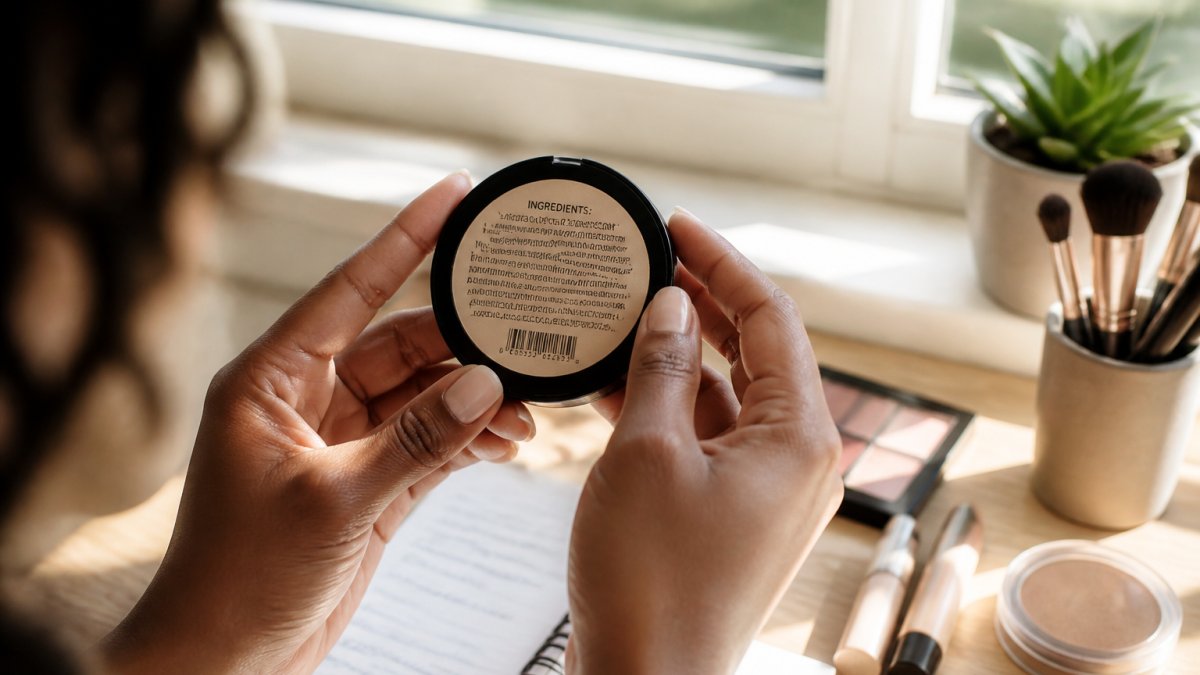
Start by identifying the base. The first ingredient is usually water, mineral oil, or a plant oil, telling you whether the formula is water-based, oil-based, or hybrid. Water-based formulas suit oily skin; oil-based formulas work better for dry skin.
Demure Mineral Blush Powder – Bold Berry | Natural, Cruelty-Free →
Next, scan for the irritants list: parabens, sulfates, synthetic fragrances, talc, phthalates, and synthetic dyes. If any appear in the first 10 ingredients, that product is conventional makeup, not non-toxic. These ingredients are listed by their chemical names, so learning the names matters:
- Parabens: methylparaben, propylparaben, butylparaben, ethylparaben
- Sulfates: sodium lauryl sulfate (SLS), sodium laureth sulfate (SLES)
- Fragrance: "fragrance," "parfum," "alcohol denat"
- Talc: listed as "talc"
- Dyes: FD&C colors, CI followed by numbers
Look for nourishing ingredients next. Antioxidants like vitamin E, green tea extract, and resveratrol protect skin. Vitamins like A, C, and B3 support skin health. Plant oils like jojoba, argan, and rosehip provide moisture.
Check the preservative system. Non-toxic formulas use gentler preservatives like phenoxyethanol, potassium sorbate, or sodium benzoate instead of parabens. These are effective and less likely to trigger reactions.
Count total ingredients. Simpler formulas with fewer ingredients are generally less irritating. A mineral blush with 5-8 ingredients is less likely to cause problems than a conventional blush with 20+ ingredients.

Clean Beauty vs. Conventional Makeup
The core difference is ingredient selection and transparency. Conventional makeup prioritizes shelf stability, bright color, and low cost. Non-toxic makeup prioritizes skin health and ingredient safety, sometimes at higher price points.
Conventional makeup uses synthetic dyes for vibrant, consistent color that doesn't fade. Non-toxic makeup uses mineral oxides and plant-derived pigments, slightly less vibrant but with better skin compatibility.
Preservative systems differ significantly. Conventional makeup relies on parabens and other synthetic preservatives that prevent microbial growth effectively but may trigger sensitivity. Non-toxic formulas use gentler alternatives that require more careful formulation to prevent contamination.
Conventional makeup often includes silicones for smooth application and long wear. Non-toxic formulas use plant oils and waxes instead, which feel different on skin, sometimes lighter, sometimes greasier.
Price reflects formulation complexity. Non-toxic makeup costs more because sourcing clean ingredients, developing alternative preservative systems, and testing for safety requires investment. Conventional makeup achieves lower prices through synthetic ingredients and simpler formulation.
Performance is comparable for most uses. Both deliver color, coverage, and wear time. Non-toxic offers reduced irritation risk and skin barrier support over time; conventional offers lower price and sometimes slightly better wear time.
Why Ingredient Transparency Matters
Ingredient transparency builds trust and enables informed choice. When a brand lists every ingredient and explains why it's included, you can decide based on your skin's needs rather than marketing claims.
Many conventional brands hide ingredient complexity behind vague terms. "Fragrance" can mean 100+ undisclosed chemicals. "Colorant" obscures whether synthetic dyes or minerals are used. This opacity prevents you from identifying problem ingredients or making conscious choices.
Non-toxic brands prioritize transparency because clean ingredients are their competitive advantage. When Gotcha Girl Cosmetics lists every ingredient, it signals confidence in the formulation. You can research each ingredient, understand its purpose, and decide whether it aligns with your values and skin needs.
Transparency also enables accountability. If a product causes a reaction, you can identify the specific ingredient responsible and avoid it in future purchases, rather than guessing which of 20+ ingredients triggered the problem.
The regulatory landscape doesn't require full transparency, that's why brand transparency matters. The FDA doesn't mandate pre-approval or ingredient disclosure for most cosmetics. Brands that go beyond minimum requirements demonstrate commitment to consumer safety and skin health.
Making the Switch: Practical Steps
Switching to non-toxic makeup doesn't require throwing away everything and starting over.
Step 1: Audit your current makeup. Gather all your makeup and review the ingredient lists. Identify which products contain parabens, sulfates, synthetic fragrances, or talc, your priority swaps.
Step 2: Start with one product. Replace your most-used item first, usually foundation or blush, to see how your skin responds to non-toxic formulas without overwhelming change.
Step 3: Patch test new products. Apply a small amount to your inner arm or behind your ear. Wait 24-48 hours before applying to your face.
Step 4: Give your skin 2-4 weeks. Your skin needs time to adjust. Irritation may temporarily increase as your barrier heals, then improve significantly.
Step 5: Gradually replace remaining products. Once you've identified formulas that work, replace other makeup items one at a time to pinpoint any problematic products.
Our Demure Mineral Blush Powder in Bold Berry is an excellent entry point. It's 100% pure crushed minerals with no talc, fillers, or synthetic fragrance.
Keep realistic expectations.
Switching to non-toxic makeup is an investment in your skin's long-term health. Our mineral blushes and cream tints are formulated without parabens, sulfates, or synthetic fragrances, just pure color and nourishing ingredients. Shop our clean beauty collection and experience the difference that non-toxic makeup ingredients make for your skin.
Frequently Asked Questions
What ingredients should I avoid in makeup?
Common harmful ingredients include parabens (linked to skin irritation), sulfates (which strip natural oils), synthetic fragrances (potential allergens), and talc (contamination risk). Phthalates, lead, and certain synthetic dyes also appear in conventional makeup. Reading ingredient lists and choosing products labeled cruelty-free and non-toxic helps you avoid these. Gotcha Girl Cosmetics's Demure Mineral Blush uses 100% pure crushed minerals with no talc or fillers, giving you clean color without compromise.
Can natural makeup ingredients irritate sensitive skin?
Natural ingredients can still trigger reactions in sensitive skin, essential oils, fragrance, and plant extracts are common culprits. However, non-toxic formulas typically exclude harsh preservatives, synthetic dyes, and chemical irritants that cause most sensitivity issues. For acne-prone or reactive skin, patch testing any new product first is essential. Gotcha Girl Cosmetics's Sweet Cheeks Soft Cheek Tint is 100% vegan and cruelty-free, designed for all skin types including sensitive skin, with a lightweight formula.
What is the difference between natural, organic, and non-toxic makeup?
Natural makeup contains plant-derived or mineral ingredients; organic means those ingredients were grown without synthetic pesticides; non-toxic refers to products formulated without harmful chemicals, preservatives, or irritants. A product can be natural but not non-toxic if it contains irritating plant oils. Non-toxic is the broadest safety claim, it focuses on what's excluded rather than what's included. When shopping, look for ingredient transparency and third-party certifications to verify these claims.
How do I know if a makeup product is genuinely safer?
Check for cruelty-free certifications (PETA, Leaping Bunny), full ingredient disclosure on the label, and absence of known irritants like parabens and sulfates. Avoid vague terms like 'clean' without specifics. Look for products made in regulated facilities and brands that explain their sourcing. Gotcha Girl Cosmetics products are cruelty-free and made in the USA, with clear ingredient lists so you know exactly what you're applying to your skin.