Table of Contents
- How Hyaluronic Acid Benefits Aging Skin
- Hyaluronic Acid Serum Benefits for Mature Skin
- How to Apply Hyaluronic Acid Serum for Best Results
- How Long Does Hyaluronic Acid Take to Work?
- Using Hyaluronic Acid with Retinol
- Molecular Weight, Formulation, and Realistic Expectations
- Hyaluronic Acid vs. Other Anti-Aging Ingredients
- Choosing the Right Hyaluronic Acid Product
- Frequently Asked Questions
Last Updated: October 20, 2026
How Hyaluronic Acid Benefits Aging Skin
Hyaluronic acid is a sugar molecule that occurs naturally in skin and holds water in the spaces between cells. As we age, our natural supply drops, and skin loses some of the bounce and dewiness it once had. That is why so many anti-aging routines now center on this one ingredient. At Gotcha Girl Cosmetics, we get asked constantly whether the hype is real, so this guide breaks down what hyaluronic acid actually does for mature skin, how to use it well, and where the marketing outruns the science.

The short answer: it hydrates, it temporarily plumps, and it softens the look of fine lines. It does not replace collagen or reverse years of sun damage. Understanding that distinction is the difference between a routine that works and one that disappoints.
What Hyaluronic Acid Is and How It Works
Hyaluronic acid (HA) is a humectant, meaning it attracts and holds water. One molecule can bind many times its weight in water, which is why it earns the nickname "moisture magnet."
In skin, HA sits in the extracellular matrix alongside collagen and elastin, keeping the tissue cushioned and hydrated. Topical HA draws water toward the skin's surface and helps the barrier hold onto it. The American Academy of Dermatology's guidance on moisturizers explains that humectants like HA work best when paired with an occlusive layer to seal moisture in. That pairing matters more than the brand on the bottle.
Plumping, Smoothing, and Moisture Retention
The visible payoff is mostly about water. When skin's water content rises, the surface looks fuller, smoother, and more reflective, which reads as a dewy complexion and a more youthful appearance.
- Plumping: hydrated skin looks firmer and less crepey, especially on cheeks and under eyes.
- Smoothing: fine lines and wrinkles appear softened because the skin around them is quenched.
- Barrier support: well-hydrated skin is more resilient against daily irritation.
Hyaluronic Acid Serum Benefits for Mature Skin
A serum delivers HA in a lightweight, fast-absorbing format that layers easily under moisturizer and makeup. For mature and aging skin, the main serum benefits are:
- Immediate hydration that plumps dry, dehydrated skin on contact.
- Softer-looking fine lines around the eyes and mouth.
- Improved skin texture and radiance with continued use.
- A better canvas for other actives, since hydrated skin tolerates retinol and acids more comfortably.
Our HydraGlow™ Hyaluronic Acid Facial Essence is built for exactly this: a lightweight Korean-inspired formula that pairs HA with Vitamin C and plant extracts to hydrate and brighten in one step. It absorbs fast with no greasy residue, so it works under makeup or as the base of a nighttime routine.
How to Apply Hyaluronic Acid Serum for Best Results
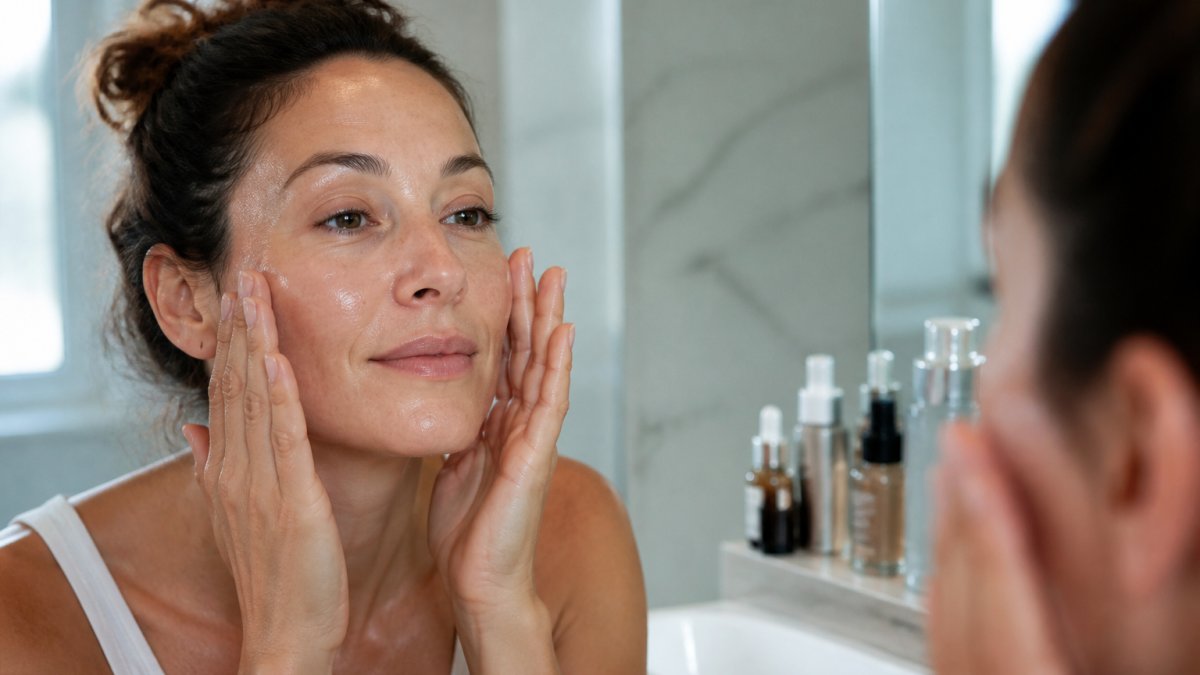
Apply HA to slightly damp skin, press it in gently, then seal it with moisturizer. That sequence is the whole game. HA needs water to draw from and a layer on top to keep it there. Apply it to bone-dry skin in a dry room and it can pull moisture from deeper layers instead, which leaves skin feeling tight.
- Cleanse and leave skin slightly damp.
- Press 2-3 drops of serum into face and neck with upward strokes.
- Follow immediately with moisturizer to lock it in.
- Use morning and night, and layer sunscreen over it in the daytime.
How Long Does Hyaluronic Acid Take to Work?
Hydration is visible within hours, while texture and fine-line improvements build over weeks of consistent use. Most people notice plumper, softer skin the same day. Deeper changes in smoothness and radiance typically show up after a few weeks of regular morning-and-night application. HA is not a one-and-done treatment; its benefits depend on continued use, and they fade if you stop.
Using Hyaluronic Acid with Retinol
HA and retinol are a strong pairing because they solve different problems. Retinol speeds cell turnover and supports collagen over time but can leave skin dry and flaky. HA offsets that dryness, making retinol easier to tolerate, especially for sensitive skin.
A practical layering order: cleanse, apply HA serum to damp skin, let it absorb, then apply retinol, then moisturizer. Some people prefer HA after retinol to buffer irritation. Either works; the key is that HA goes on damp skin and moisturizer finishes the job. If your skin stings, scale back retinol frequency before cutting HA.
Molecular Weight, Formulation, and Realistic Expectations
Two serums can both say "hyaluronic acid" on the label and behave very differently on your skin. The variables that matter most are molecular weight, concentration, and what the formula pairs HA with.
Molecular weight changes where HA works. High-molecular-weight HA is a large molecule that stays near the surface, where it delivers immediate plumping and a dewy finish.
Concentration is not a scoreboard. A higher percentage of HA is not necessarily better.
Formulation partners matter as much as the HA. HA works best with a humectant-friendly base and a seal on top. Look for formulas that also include glycerin, panthenol, or a hydrating toner step, and plan to follow with a moisturizer containing occlusives or ceramides.
Evidence quality and realistic expectations. The well-supported benefits of topical HA are hydration, temporary plumping, and softer-looking fine lines, backed by its known water-binding mechanism and general dermatology guidance on humectants. Stronger claims about collagen production, lasting wrinkle reduction, or structural change are not well supported for topical HA.
| What HA Delivers | What It Does Not Do |
|---|---|
| Surface hydration and temporary plumping | Rebuild collagen or elastin |
| Softer-looking fine lines | Erase deep wrinkles |
| Better barrier resilience when sealed with moisturizer | Replace retinol or sunscreen |
| A dewier, more radiant finish | Permanent structural change |
Sunscreen remains the single most effective anti-aging product you can use, and HA works best underneath it. The U.S. Food and Drug Administration's overview of cosmetics and ingredients is a useful reference for understanding what cosmetic claims can and cannot promise.
HydraGlow™ Hyaluronic Acid Facial Essence – Deep Moisture Korean Skin Serum →
Hyaluronic Acid vs. Other Anti-Aging Ingredients
Hyaluronic acid is rarely the star of an anti-aging routine, and that is fine. Its job is to keep skin hydrated and comfortable so the ingredients that do the structural work can do it without irritation.
Hyaluronic acid vs. retinoids (retinol, tretinoin, adapalene). Retinoids are the most evidence-backed topical ingredients for fine lines and texture because they speed cell turnover and support collagen over time.
Hyaluronic acid vs. vitamin C. Vitamin C is an antioxidant that helps defend against environmental stress and can improve the look of uneven tone. HA has no antioxidant role; it hydrates.
Hyaluronic acid vs. ceramides and other barrier ingredients. Ceramides, cholesterol, and fatty acids are lipids that rebuild the skin barrier; HA is a humectant that attracts water. They solve different halves of the same problem.
Hyaluronic acid vs. peptides. Peptides are short chains of amino acids used in cosmetics to support the appearance of firmness over time; the evidence is more modest and formula-dependent than for retinoids.
Hyaluronic acid vs. sunscreen. Sunscreen is the single most effective anti-aging product you can use because it prevents the UV damage that drives much of visible aging. The U.S. Centers for Disease Control and Prevention's sun safety guidance explains why daily protection matters.
What HA does not replace. It does not rebuild collagen or elastin, erase deep wrinkles, or reverse sun damage. It will not do the work of a retinoid, an antioxidant, or daily sun protection.
For a firmer, more nourished finish, our GlowLift™ Gold Collagen Anti-Wrinkle Cream Set layers collagen and gold particles over a hydrating base, and the GlowDrench™ Bio Collagen Face Mask delivers overnight hydration and pore-refining care.

Choosing the Right Hyaluronic Acid Product
Look for a serum that lists sodium hyaluronate (the salt form of HA), ideally with more than one molecular weight, and pair it with a moisturizer that contains occlusives. Fragrance-free formulas suit sensitive skin better. Check the label for HA's position in the ingredient list; near the top usually means a meaningful concentration.
Sunscreen remains the single most effective anti-aging product you can use, and HA works best underneath it. The U.S. Centers for Disease Control and Prevention's sun safety guidance outlines why daily protection matters for skin aging.
Aging skin needs hydration it can count on, and hyaluronic acid delivers it without a steep learning curve. The trick is using it correctly: damp skin, a moisturizer on top, and realistic expectations. Gotcha Girl Cosmetics makes that easy with ethically sourced, affordable formulas like our HydraGlow™ Hyaluronic Acid Facial Essence, our Snail Mucin 97% Daily Face Moisturizer for sealing in moisture, and our GlowLift™ Gold Collagen set for firming support. Shop the collection and build a routine that keeps your skin quenched, comfortable, and glowing.

Frequently Asked Questions
What are the benefits of using hyaluronic acid serum?
A hyaluronic acid serum delivers concentrated hydration to the skin, which helps plump the surface and soften the look of fine lines. Because hyaluronic acid holds water, it can leave skin feeling softer and looking more radiant. For aging skin, that added moisture supports a smoother texture and a dewier complexion. A lightweight option like HydraGlow Hyaluronic Acid Facial Essence ($24.99) also includes vitamin C for brightness, making it easy to layer morning and night.
How long does it take for hyaluronic acid to work?
Hydration is often visible right away. Many people notice plumper, softer skin within a day of the first application because hyaluronic acid draws water to the surface quickly. Changes in the look of fine lines and overall smoothness usually build over two to four weeks of continued use. Results depend on your climate, how well you seal the serum in with a moisturizer, and whether your skin is dehydrated to begin with.
Should you apply hyaluronic acid to damp or dry skin?
Apply it to damp skin. Hyaluronic acid is a humectant, meaning it attracts water. On dry skin in a dry room, it can pull moisture from deeper layers instead of the air, which may leave skin feeling tight. After cleansing and toning, press a few drops into skin that is still slightly damp, then follow with a moisturizer to lock that water in. This is especially helpful in winter or air-conditioned rooms.
Can you use hyaluronic acid with retinol or vitamin C?
Yes. Hyaluronic acid pairs well with both retinol and vitamin C. Retinol can cause dryness and flaking when you start, and layering hyaluronic acid underneath helps cushion that adjustment period. With vitamin C, apply the vitamin C first, then hyaluronic acid, then moisturizer. Many routines use hyaluronic acid in the morning under sunscreen and again at night with retinol. If irritation appears, space the actives out and keep the hyaluronic acid daily.
Can hyaluronic acid reduce the appearance of fine lines and wrinkles?
It can soften how fine lines look by adding moisture and plumping the skin's surface, but it does not erase wrinkles or replace collagen. Think of it as a hydration boost rather than a structural repair. For aging skin, the most visible change is usually smoother, fuller-looking skin with a more radiant finish. Pairing hyaluronic acid with collagen-supporting products and daily sunscreen gives you a more complete routine than hyaluronic acid alone.
How often should you use hyaluronic acid serum?
Twice a day is fine for most skin types, morning and night. Hyaluronic acid is generally gentle and well tolerated, so daily use is not a concern the way it can be with stronger actives. If your skin is very sensitive, start once a day and add the second application after a week. Always follow with moisturizer to seal in the hydration, and use sunscreen in the morning since hydration does not replace UV protection.