Table of Contents
- Why Is Your Makeup Patchy: Common Causes
- How to Prep Skin for Foundation
- Primer and Foundation Compatibility
- Why Foundation Separates on Your Face
- Best Way to Apply Liquid Foundation
- How to Fix Cakey Makeup Without Starting Over
- Troubleshooting Patchy Makeup by Skin Type
- Frequently Asked Questions
Last Updated: October 12, 2026
Why Is Your Makeup Patchy: Common Causes
Understanding why is my makeup patchy is the first step to fixing it, since patchy makeup ruins an otherwise perfect look. You apply foundation carefully, blend it in, and by midday it's separating, flaking, or sitting unevenly on your face. The frustration is real, but the fix starts with understanding what's actually causing it.
Patchiness rarely happens for just one reason. It's usually a combination of factors: your skin condition, how you prep, the products you're using, and your application technique. Once you know which one is working against you, fixing it becomes straightforward.
Excess Oil and Foundation Breakdown
Oil is the enemy of a smooth, even base. When your skin produces excess sebum, it breaks down foundation and causes it to separate into patches. This happens fastest in your T-zone, forehead, nose, and chin, where oil glands are most active.
The problem gets worse if your foundation isn't designed to handle oily skin. Water-based foundations sit on top of oil and slide around. Silicone-based formulas grip better, but only if you use the right primer underneath.
Oil also mixes with makeup, creating a slick surface where product can't adhere evenly. You end up with bare patches where the foundation has completely broken down, and thick spots where it's clumped together.
Dry, Flaky Skin and Uneven Texture
Dry skin creates the opposite problem. When your skin is dehydrated, foundation clings to dry patches and flakes off in other areas. Rough texture becomes visible under makeup instead of being smoothed over.
Flaking happens because dry skin has gaps and rough spots. Foundation fills these gaps unevenly, some areas get more product, others get less. When you blend, the uneven texture shows through. The result looks patchy and emphasizes every dry spot on your face.
Dehydration also causes your skin to feel tight, which makes blending difficult. You either over-blend and disturb the foundation, or under-blend and leave visible lines and patches.
Too Much Product or Cakey Application
More product doesn't equal better coverage. In fact, it's one of the biggest causes of patchy makeup.
When you apply too much foundation, it sits heavily on your skin instead of blending smoothly. The weight of the product causes it to settle unevenly, thick in some spots, thin in others.
Cakey makeup also emphasizes texture. Every pore, every dry patch, every line becomes more visible under a thick layer of foundation. The result looks heavy and unnatural, with obvious patches where the product is thickest.
The fix is counterintuitive: use less product. A thin layer blends better, looks more natural, and stays in place longer.
How to Prep Skin for Foundation
Your foundation is only as good as the base underneath it. Proper skin prep is non-negotiable for even coverage.
Cleanse and Hydrate Your Base
Start with clean skin. Wash your face with a gentle cleanser to remove oil, dirt, and dead skin cells. This gives foundation a smooth surface to grip.
After cleansing, hydrate. Apply a lightweight moisturizer while your skin is still slightly damp. Damp skin absorbs moisture better than completely dry skin.
Hydration matters because it plumps your skin slightly, filling in fine lines and texture. This creates a smoother canvas for foundation.
If you have oily skin, don't skip moisturizer. Oil production often increases when skin is dehydrated. Your skin is trying to compensate for the lack of moisture. Hydrating actually helps control excess oil.
Address Rough Texture Before Makeup
Rough texture is the enemy of smooth foundation application. If your skin feels bumpy or has visible dry patches, address that before makeup.
Use a gentle exfoliant 2-3 times per week. Physical exfoliants (like a soft brush or gentle scrub) or chemical exfoliants (like AHAs or BHAs) both work. Exfoliation removes dead skin cells and smooths texture.
After exfoliating, follow up with a hydrating mask or treatment. Exfoliation can dry skin out, so replenish moisture immediately. Your skin will feel smoother and look more even.
If you have very sensitive skin, skip physical exfoliants and stick with gentle chemical ones. Physical scrubbing can irritate and worsen texture.
Primer and Foundation Compatibility
Your primer and foundation need to work together. Incompatible products are a common reason why is my makeup patchy.
Silicone-Based vs. Water-Based Primers
Silicone-based primers create a smooth, slippery base. They fill in pores and fine lines, creating an airbrushed effect. These primers work best with silicone-based foundations because the two products bond together and stay in place.
Water-based primers are lighter and feel less heavy on skin. They work best with water-based foundations. If you mix silicone and water-based products, they don't bond properly. Foundation slides around on the primer instead of staying put.
Check your primer and foundation labels. If one says "silicone-based" and the other says "water-based," they won't work well together. Switch one of them to match.
The American Academy of Dermatology recommends matching primer and foundation formulations for best results. This simple step prevents most compatibility issues.
Why Foundation Separates on Your Face
Foundation separation happens when your base isn't stable. The product literally breaks apart instead of staying as one even layer.
Separation usually means one of three things: your primer and foundation don't match, you're using too much product, or your skin is too oily.
You'll notice separation most in areas that produce the most oil, usually your T-zone. The foundation pulls away from these areas and clumps up elsewhere, creating an uneven, patchy appearance.
The fix depends on the cause. If it's a primer-foundation mismatch, switch products. If you're using too much, apply less. If it's excess oil, use a mattifying primer and blot throughout the day.

Best Way to Apply Liquid Foundation
Application technique determines whether your foundation looks even or patchy. Small adjustments make a huge difference.
Choosing Your Application Tool
Your tool matters as much as your technique. The three main options are your fingers, a brush, or a sponge.
Fingers are the most natural option. Your body heat warms the foundation, making it easier to blend. However, fingers can apply product unevenly and don't provide precise control.
20ml Matte Makeup Primer for Pore Minimization and Oil Control, Suitable →
Brushes offer more control. A dense, flat-topped brush like the 1.5" Top Diameter Foundation Brush from Gotcha Girl Cosmetics applies foundation smoothly and evenly. Brushes work well for full coverage and precise blending.

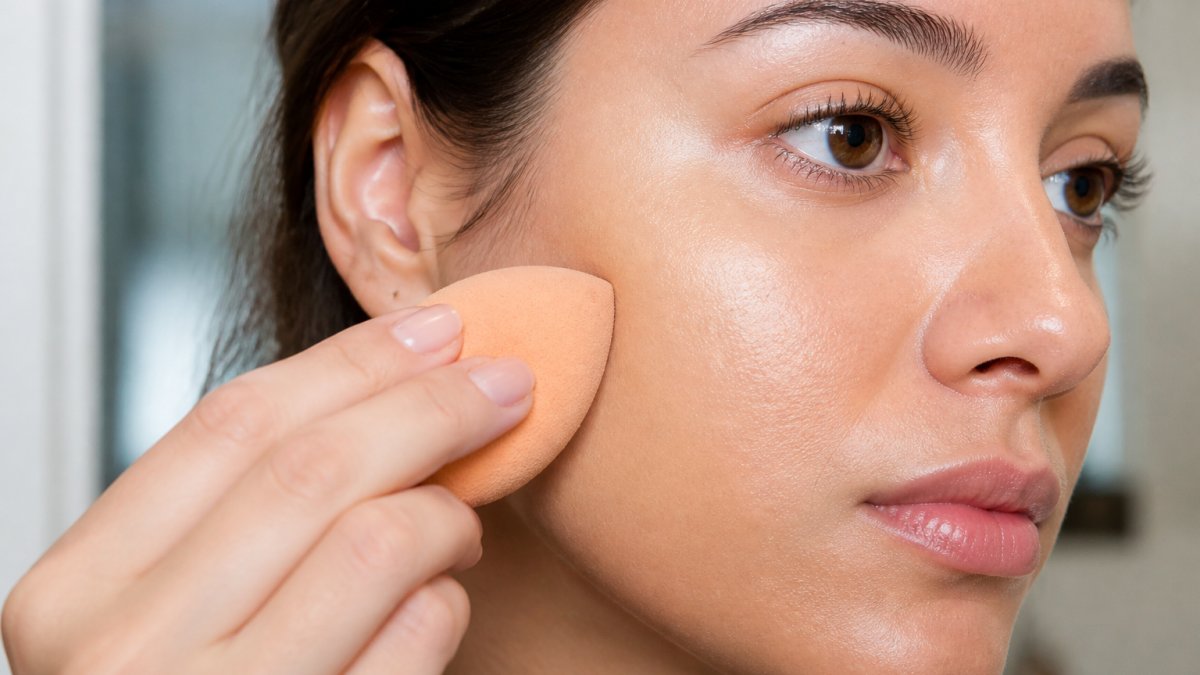
Sponges blend foundation into skin for a natural, seamless finish. A damp beauty sponge absorbs less product than a dry one, so you use less foundation overall. The COSTICA Makeup Sponge Set from Gotcha Girl Cosmetics includes multiple sponge shapes for different areas of your face.

Damp your sponge with water before using it. A wet sponge expands and becomes softer, which helps it blend foundation seamlessly without absorbing too much product.
Blending and Layering Technique
Apply foundation in thin layers, not one thick coat. Start with a small amount, about a pea-sized drop, and blend it into your skin completely before adding more.
Use a dabbing motion rather than rubbing or dragging. Dabbing presses foundation into skin and helps it adhere evenly.
Blend from the center of your face outward. Start at your nose and work toward your ears, temples, and jawline.
If you're using a sponge, bounce it gently across your skin. Don't drag it. Bouncing helps foundation settle into skin without disturbing the layers underneath.
Build coverage gradually. One thin layer might not give full coverage, but two or three thin layers will.
How to Fix Cakey Makeup Without Starting Over
If your makeup is already patchy or cakey, you don't always need to remove it and start over. Small fixes can save your look.
Use a damp beauty sponge to gently blend problem areas. The moisture helps soften thick spots and blend them into surrounding skin.
For very cakey areas, use a setting spray instead of powder. Setting spray helps blend thick spots and prevents additional buildup. Spray lightly and let it dry.
If you have bare patches, use a concealer that matches your foundation to fill them in.
For mid-day touch-ups, blot your face with a tissue first to remove excess oil. Then apply a light layer of powder to mattify and set your makeup.
Troubleshooting Patchy Makeup by Skin Type
Different skin types need different solutions.
Oily Skin: Controlling Breakdown
Oily skin requires a mattifying primer and silicone-based foundation. The silicone grips better to oily skin than water-based products.
Use the 20ml Matte Makeup Primer from Gotcha Girl Cosmetics to control oil and minimize pores. A mattifying primer reduces shine and helps foundation stay in place.
Apply foundation in thin layers and use a sponge to blend. Sponges absorb less product than brushes.
Blot throughout the day with blotting papers, not powder. Powder can add to buildup and make makeup look cakey. Blotting papers remove excess oil without adding product.
Set your makeup with a setting spray, not powder. Spray helps lock foundation in place without adding texture.
Dry Skin: Preventing Flaking and Separation
Dry skin needs hydration and a water-based primer. Water-based primers are lighter and don't emphasize dry patches.
Prep your skin thoroughly. Use a hydrating moisturizer and let it fully absorb before applying primer. Damp skin absorbs more moisture than completely dry skin.
Use a water-based foundation that won't cling to dry spots. Apply in thin layers and blend gently.
Avoid powder on dry skin. Powder can emphasize dry patches and make makeup look cakey. Instead, use a hydrating setting spray.
If you have very dry patches, apply a hydrating concealer to those areas before foundation. The extra moisture helps foundation blend smoothly.
Combination Skin: Balancing Problem Areas
Combination skin is tricky because different areas have different needs. Your T-zone might be oily while your cheeks are dry.
Use a silicone-based primer on your T-zone and a water-based primer on your cheeks.
Apply foundation in thin layers and blend thoroughly. Use a sponge to blend, which helps you control product application in each area.
Set your T-zone with powder to control shine, but skip powder on dry areas. Use a setting spray on dry areas instead.
Throughout the day, blot your T-zone with blotting papers to remove excess oil.
Patchy makeup usually comes down to one or two fixable issues: improper prep, incompatible products, or application technique.
Frequently Asked Questions
Why does my patchy makeup happen only by midday?
Midday patchiness usually signals excess oil breaking down your base or product separation. If your skin is oily, sebum dissolves foundation, causing it to slip and clump in certain areas. If you have dry skin, dehydration can cause foundation to separate from rough patches. Using a silicone-based primer and setting powder helps extend wear time and prevents midday breakdown.
How do I know if my primer and foundation are compatible?
Test compatibility before full application: apply a small amount of primer to your inner arm, let it dry, then dab foundation on top. If the foundation beads up or slides around, they're not compatible. The Matte Makeup Primer for Pore Minimization works for oily, dry, and combination skin types, making it a versatile choice for many foundation formulas.
Can I fix patchy makeup without removing it all?
Yes. Use a damp beauty sponge to gently blend problem areas, or apply a thin layer of foundation with a brush to patchy spots. For cakey areas, use a light mist of setting spray to reactivate the product and smooth it out. If your makeup is separating due to oil, blot with blotting paper first, then apply a small amount of foundation to that area. Avoid heavy-handed application when fixing, thin layers blend better than thick ones.
Should I use a brush or sponge for liquid foundation?
Both work, but for different results. Brushes like the 1.5" Foundation Brush provide more control and even coverage, especially for cream and liquid formulas. Sponges like the COSTICA 4-Piece Makeup Sponge Set create an airbrushed finish and work best when damp, they expand when wet, allowing the sponge to stay on top of the product rather than absorbing it, giving you better coverage with minimal waste. Use whichever feels comfortable and matches your desired finish.