Table of Contents
- What Defines Non-Toxic Skincare for Sensitive Skin
- Clean Beauty Ingredients to Avoid
- How to Read Skincare Labels for Toxins
- Soothing Natural Ingredients That Calm Reactive Skin
- Best Non-Toxic Moisturizer for Sensitive Skin
- Building Your Non-Toxic Routine: Step by Step
- Common Mistakes When Switching to Clean Beauty
- Frequently Asked Questions
Last Updated: September 18, 2026
What Defines Non-Toxic Skincare for Sensitive Skin
Non-toxic skincare for sensitive skin means products formulated without synthetic chemicals, artificial preservatives, or common irritants that trigger inflammation, redness, or barrier damage in reactive complexions. The core principle is simple: fewer synthetic ingredients, more skin-compatible formulations that work with your skin's natural biology rather than against it.
Sensitive skin reacts to harsh compounds because the skin barrier is compromised, which is why non toxic skincare for sensitive skin focuses on barrier-strengthening formulations. Sulfates strip protective oils, synthetic fragrances penetrate the barrier, and both break down the wall that keeps irritants out and hydration in. Non-toxic formulations respect that barrier by using plant-based soothing agents, naturally derived preservatives, and pH-balanced bases that calm rather than provoke.
At Gotcha Girl Cosmetics, we've built our sensitive skin collection around this principle. The difference between a product that heals and one that harms comes down to what's excluded, what's included, and whether ingredients work together to strengthen your skin barrier.
The real challenge is finding products that deliver results without triggering reactions. Many brands use irritating preservatives or fragrance compounds despite "non-toxic" labels. Reading labels and understanding ingredient interactions separates effective skincare from expensive placebos.
Clean Beauty Ingredients to Avoid
The ingredients that damage sensitive skin fall into predictable categories. Knowing what to skip is half the battle.
Synthetic Preservatives and Their Alternatives
Synthetic preservatives keep products shelf-stable but trigger inflammation in reactive skin. Parabens mimic hormones and accumulate in skin tissue. Formaldehyde releasers like DMDM hydantoin break down into formaldehyde, causing contact dermatitis in sensitive individuals (pubmed.ncbi.nlm.nih.gov).
Natural alternatives include phenoxyethanol (synthetic but gentler than parabens), potassium sorbate, sodium benzoate, and plant extracts like rosemary seed oil, which contains natural antioxidants that prevent degradation without inflammatory load.
Fragrance, Sulfates, and Phthalates
Fragrance is the invisible villain in skincare. Fragrance compounds penetrate the barrier and trigger histamine release, causing redness, itching, and irritation. For sensitive skin, fragrance-free is a requirement, not a preference.
Sulfates are surfactants that strip oils from skin and are the primary cause of barrier damage, making skin more reactive and inflamed. Sulfate-free formulations use gentler surfactants derived from coconut or sugar that clean without destroying your skin's natural protective layer.
Phthalates are plasticizers hidden under the term "fragrance" on labels. They disrupt endocrine function and increase skin permeability, making your barrier more reactive.
Non-toxic skincare avoids all three. Look for "fragrance-free" (not "unscented"), "sulfate-free," and brands that disclose fragrance sources or skip fragrance entirely.
How to Read Skincare Labels for Toxins
Reading skincare labels for toxins requires understanding ingredient hierarchy and recognizing red flags.
Ingredients are listed in descending order by concentration, with the first five making up roughly 80% of the formula, a critical detail when evaluating non toxic skincare for sensitive skin. If you see parabens, sulfates, or synthetic fragrance in the first five, that product isn't non-toxic skincare for sensitive skin.
Look for these red flags:
- "Fragrance" or "parfum" anywhere on the list (indicates undisclosed fragrance compounds, potentially including phthalates)
- Parabens (methylparaben, propylparaben, butylparaben, ethylparaben)
- Sulfates (SLS, SLES, ammonium lauryl sulfate)
- Formaldehyde releasers (DMDM hydantoin, imidazolidinyl urea, diazolidinyl urea)
- Phenoxyethanol in high concentration (generally safe in low amounts, but problematic as a primary preservative)
Green flags for non-toxic skincare:
- Plant-derived preservatives (rosemary seed oil, tocopherol, ascorbyl palmitate)
- Soothing botanical extracts (chamomile, centella asiatica, oat extract)
- Natural humectants (glycerin, hyaluronic acid, panthenol)
- pH-balancing ingredients (citric acid, sodium hydroxide to adjust pH toward skin-neutral 4.5-5.5)
"Natural" and "organic" don't automatically mean non-irritating. Lavender and tea tree oil are natural but top contact allergens and comedogenic for sensitive skin. Non-toxic skincare for sensitive skin means understanding which natural ingredients actually calm reactive skin.

| Red Flag Ingredient | Why It's Problematic | What to Use Instead |
|---|---|---|
| Parabens | Hormone disruption, skin accumulation | Potassium sorbate, sodium benzoate |
| Sulfates (SLS/SLES) | Strips skin barrier, causes inflammation | Coconut-derived surfactants, sugar-derived cleansers |
| Synthetic fragrance | Triggers histamine release, barrier penetration | Fragrance-free or essential oil-free formulas |
| Formaldehyde releasers | Contact dermatitis, sensitization | Phenoxyethanol (low %), plant preservatives |
| Phenoxyethanol (high %) | Irritation when primary preservative | Use in low concentration or skip entirely |
Soothing Natural Ingredients That Calm Reactive Skin
The best non-toxic skincare for sensitive skin doesn't just avoid irritants, it actively heals. These ingredients reduce inflammation, strengthen the skin barrier, and calm reactivity.
Snail mucin (secretion filtrate) is packed with proteins, hyaluronic acid, and glycoproteins that repair barrier function and reduce redness. It absorbs quickly, hydrates without occlusion, and has clinical validation for sensitive skin. Gotcha Girl Cosmetics' Snail Mucin 97% Daily Face Moisturizer Cream delivers this ingredient at high concentration for barrier repair and redness reduction.
Centella asiatica (cica) stimulates collagen production, strengthens barrier function, and reduces inflammation markers in reactive skin. For eczema-prone or rosacea-safe skincare, centella is essential.
Raw honey is antimicrobial, anti-inflammatory, and humectant. Organic, unpasteurized honey contains enzymes and amino acids that support skin microbiome health. Tallow Honey Balm™ combines grass-fed beef tallow with raw honey, mimicking your skin's natural sebum composition while providing intense hydration for reactive, inflamed skin.

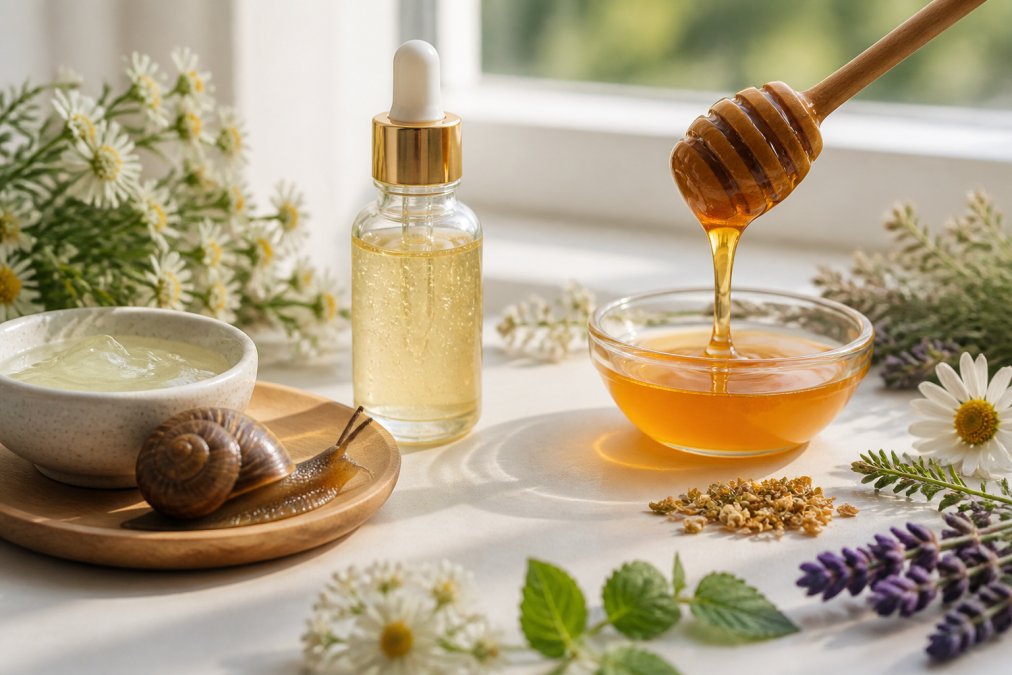
Hyaluronic acid holds up to 1000x its weight in water, drawing moisture into the epidermis without occlusion or barrier disruption. HydraGlow™ Hyaluronic Acid Facial Essence pairs it with vitamin C and botanical extracts for 24-hour hydration and brightening.
Panthenol (provitamin B5) reduces transepidermal water loss and supports barrier repair without triggering reactions in highly sensitive individuals.
Tallow Honey Balm™ – Deep Moisture →
These ingredients actively repair rather than just feel soothing. They strengthen the skin barrier, reduce inflammation, and support your skin microbiome. Non-toxic skincare for sensitive skin means choosing ingredients backed by traditional use and clinical validation.
Best Non-Toxic Moisturizer for Sensitive Skin
A moisturizer for sensitive skin needs to do three things: hydrate without occlusion, strengthen barrier function, and avoid triggering inflammation.
What to Look For in a Gentle Moisturizer
The best non-toxic moisturizer combines three layers: a humectant (draws water in), an emollient (seals moisture), and an occlusive (prevents water loss).
Look for these features:
- Hyaluronic acid or glycerin as the primary hydrating agent
- Plant-based emollients (jojoba oil, squalane, plant ceramides) instead of mineral oil or petrolatum
- Natural occlusives like tallow, shea butter, or plant waxes
- Fragrance-free formulation
- pH-balanced (ideally 4.5-5.5, matching skin's natural pH)
Skip anything with synthetic fragrance, essential oils, or high alcohol concentrations.
Gotcha Girl Cosmetics offers two standout options for sensitive skin:
Tallow Honey Balm™ ($47.88) is a deeply nourishing option for barrier repair. Grass-fed beef tallow mimics your skin's natural sebum composition, combined with raw honey and vitamins A, D, E, and K. It soothes dryness, irritation, and redness without synthetic ingredients and works for all skin types.
Snail Mucin 97% Daily Face Moisturizer Cream ($42.99) is the lightweight alternative for non-greasy hydration. At 97% snail mucin concentration, it delivers maximum hydration and barrier repair without occlusion. It absorbs quickly and is cruelty-free, dermatologist-tested, and free from parabens and harsh chemicals.

Building Your Non-Toxic Routine: Step by Step
A non-toxic skincare routine for sensitive skin is simpler than most guides suggest. Complexity breeds irritation. Stick to essentials.
Step 1: Cleanse gently. Use fragrance-free, sulfate-free cleansers that remove dirt without stripping oils. Burt's Bees Micellar Facial Towelettes ($26.99 for 3-pack) are made with 60% upcycled cotton, formulated without parabens, phthalates, petrolatum or SLS, and remove makeup without harsh scrubbing.
Step 2: Hydrate with a serum. Apply a hydrating serum while skin is still slightly damp. HydraGlow™ Hyaluronic Acid Facial Essence ($24.99) delivers deep hydration and absorbs instantly without interfering with other products.
Step 3: Moisturize. Apply your chosen moisturizer, Tallow Honey Balm™ for deep nourishment or Snail Mucin 97% for lightweight hydration, using gentle upward strokes.
Step 4: Protect. During the day, apply a mineral sunscreen to prevent UV damage that exacerbates reactivity.
Patch Testing Before Full Integration
Before introducing any new product, patch test it for 24-48 hours on a small area behind your ear or inside your arm. Apply once daily and watch for redness, itching, or swelling.
Some reactions take 48-72 hours to develop. Patch testing prevents full-face flare-ups and helps identify which ingredients trigger reactivity. Introduce one new product every 1-2 weeks to isolate problem ingredients.
Common Mistakes When Switching to Clean Beauty
People switching to non-toxic skincare for sensitive skin often make predictable errors that sabotage results.
Mistake 1: Assuming "natural" means non-irritating. Tea tree oil and lavender are natural but top contact allergens and comedogenic for sensitive skin.
Frequently Asked Questions
What ingredients should be avoided in skincare for sensitive skin?
Avoid synthetic fragrances, sulfates (SLS and SLES), parabens, phthalates, and harsh preservatives like formaldehyde releasers. These can trigger inflammation, redness, and barrier damage. Look for paraben-free, sulfate-free, and fragrance-free labels. Essential oils, while natural, can irritate reactive skin, patch test first. Products labeled hypoallergenic and dermatologist-tested are safer starting points for sensitive skin types.
How can you tell if a skincare product is truly non-toxic?
Check the ingredient list for synthetic preservatives, fragrance, and known irritants. Look for certifications like Leaping Bunny (cruelty-free). Avoid vague terms like 'proprietary blend.' Read reviews from people with similar skin conditions. Patch test on your inner arm for 24-48 hours before applying to your face. Dermatologist-tested formulas designed for sensitive skin offer more assurance than unverified 'clean' claims.
What are the best non-toxic ingredients to soothe sensitive skin?
Snail mucin soothes irritation and supports skin healing without harsh chemicals. Hyaluronic acid hydrates deeply without comedogenic risk. Raw honey and tallow-based balms repair the skin barrier naturally. Niacinamide reduces redness and strengthens skin defenses. Panthenol and allantoin calm inflammation. Botanical extracts like chamomile provide antioxidant support. Products like the Snail Mucin 97% Daily Face Moisturizer Cream ($42.99) and Tallow Honey Balm™ ($47.88) combine these soothing agents without synthetic irritants.
How do I transition to a non-toxic skincare routine without irritating my skin?
Introduce one new product every 5-7 days and patch test first. Start with a gentle cleanser, then add a hydrating toner or essence like HydraGlow™ Hyaluronic Acid Facial Essence ($24.99). Follow with a non-toxic moisturizer suited to your skin type. Avoid mixing too many active ingredients at once. If redness or irritation occurs, stop and return to your previous routine. Give your skin 2-3 weeks to adjust before adding more products. Consistency matters more than complexity for sensitive skin.