Table of Contents
- Step 1: Audit Your Current Routine and Identify Waste
- Step 2: Choose Eco-Friendly Skincare Swaps That Work
- Step 3: Read Ingredient Labels and Choose Natural Options
- Step 4: Use the Best Natural Body Oils for Glowing Skin
- Step 5: Reduce Water Consumption in Your Routine
- Step 6: Master How to Recycle Beauty Product Packaging
- Common Mistakes to Avoid
- Frequently Asked Questions
Last Updated: September 30, 2026
Step 1: Audit Your Current Routine and Identify Waste
Building sustainable skincare habits starts with understanding what you're actually using. Take a hard look at your bathroom shelf and ask yourself: What am I buying? How much am I using? What's ending up in the trash?
Most people don't realize how much packaging waste they generate. A typical skincare routine produces dozens of plastic bottles, jars, and tubes annually. The average person discards roughly 120 pounds of personal care packaging per year. This audit isn't about guilt, it's about clarity.
Start by listing every product you own. Note the packaging type: plastic, glass, aluminum, or mixed materials. Check expiration dates. Many people hold onto products for years past their shelf life, which defeats the purpose of a sustainable routine.
What to track during your audit:
- Product name and packaging material
- Purchase frequency
- Actual usage rate (do you finish bottles or toss them half-full?)
- Expiration dates
- Products you've never opened
Once you see the full picture, you'll spot patterns. Maybe you buy three moisturizers and use one. Maybe you're drawn to single-use masks and cleansing wipes. These insights guide your next steps toward sustainable skincare habits that actually work for your lifestyle.
Step 2: Choose Eco-Friendly Skincare Swaps That Work
Not every sustainable swap feels good on your skin. The key is finding replacements that deliver results, not just good intentions.
Start with products you use daily. If you go through a bottle of cleanser every month, that's a high-impact swap. Switching to an eco-friendly cleanser prevents 12 plastic bottles from the landfill annually. If you use a product occasionally, the environmental gain is smaller, focus on the daily staples first.
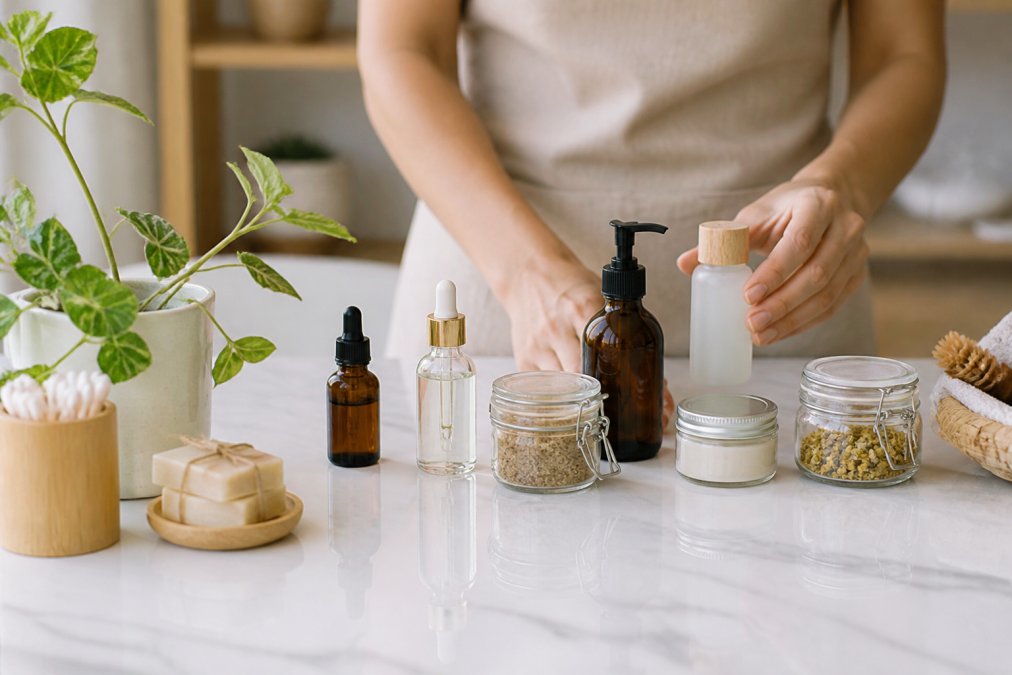
Switch to Multi-Tasking Products
One product that does three jobs beats three products that do one each. Multi-tasking products cut packaging waste, simplify your routine, and usually cost less per use.
Look for products that serve double duty: a moisturizer with SPF, a serum with vitamin C and hyaluronic acid, or a cleanser that also exfoliates gently. These consolidations reduce the number of bottles on your shelf and the amount of water and synthetic ingredients entering your routine.

Multi-tasking products reduce:
- Packaging waste by 30-50%
- Daily routine time
- Decision fatigue
- Overall product spending
At Gotcha Girl Cosmetics, we recommend the HydraGlow™ Hyaluronic Acid Facial Essence as a core multi-tasker. It hydrates, brightens with vitamin C, and works under makeup or alone, cutting the need for separate serums and essences.
Prioritize Refillable and Minimal Packaging
Refillable containers are the gold standard for sustainable skincare habits. You keep the container and purchase refills, cutting packaging waste by up to 80% per refill cycle.
Minimal packaging means no excess cardboard, plastic inserts, or unnecessary layers. Some brands ship products in paper-based packaging that biodegrades. Others use glass or aluminum, both infinitely recyclable materials that don't degrade in quality.
When you're evaluating products, ask: Can this be refilled? Is the container reusable? Can I recycle it when it's empty? These questions guide you toward true sustainability, not just marketing claims.
Step 3: Read Ingredient Labels and Choose Natural Options
Your skin doesn't need synthetic chemicals to look good. Natural and plant-based ingredients deliver results without the environmental impact of synthetic production.
Start learning the difference between synthetic and natural ingredients. Synthetic ingredients like silicones and parabens are produced in labs using energy and chemicals. Natural oils, plant extracts, and minerals come from renewable sources and break down more easily in the environment.
Check your product labels for these sustainable skincare habits markers:
- Natural oils (jojoba, argan, rosehip)
- Plant extracts (green tea, aloe, chamomile)
- Minerals (zinc oxide, titanium dioxide for SPF)
- Biodegradable surfactants for cleansers
Avoid products with long ingredient lists dominated by unpronounceable chemicals. A shorter list of recognizable ingredients usually means cleaner formulation and less environmental impact during manufacturing.
Ingredient transparency matters. Brands that hide their formulas behind proprietary blends often have something to hide. Look for companies that publish full ingredient lists and explain why each ingredient is included.
Tallow Honey Balm™ – Deep Moisture →
Step 4: Use the Best Natural Body Oils for Glowing Skin
Natural body oils are the foundation of sustainable skincare habits because one product replaces multiple creams, serums, and lotions. Oils absorb efficiently, require minimal packaging, and last longer than water-based products.
The best natural body oils for glowing skin contain vitamins and fatty acids that nourish skin without synthetic additives. Look for cold-pressed oils that preserve nutrient content and avoid refined versions stripped of their benefits.
Natural oils that work for sustainable routines:
- Jojoba oil: balances oil production, absorbs quickly
- Argan oil: rich in vitamin E, works on all skin types
- Rosehip oil: brightens, reduces redness
- Coconut oil: deeply moisturizing but comedogenic for some
- Squalane: lightweight, mimics skin's natural oils
Gotcha Girl Cosmetics offers the Tallow Honey Balm™, which combines organic grass-fed beef tallow and raw honey. This balm delivers vitamins A, D, E, and K without synthetic moisturizers. One jar replaces multiple products and comes in minimal, reusable packaging.

Natural oils concentrate benefits into small amounts. You use less product per application, which means bottles last longer and fewer resources go into production and shipping. This efficiency is what makes natural body oils for glowing skin a cornerstone of sustainable beauty.
Step 5: Reduce Water Consumption in Your Routine
Water is the largest ingredient in most skincare products. Reducing water consumption in your routine cuts manufacturing impact and shipping weight.
Choose concentrated products over diluted ones. A serum contains more active ingredients per ounce than a lotion. A balm or oil requires no water at all. These formats deliver better results while using fewer resources.
Simplify your routine to reduce the number of rinse steps. Every time you rinse, you use water. Cleansers that don't require multiple rinses save water immediately.
Ways to cut water use:
- Use concentrated serums instead of toners
- Choose oil or balm cleansers over foaming washes
- Limit your routine to 3-4 products maximum
- Apply products to damp skin (they absorb better)
Step 6: Master How to Recycle Beauty Product Packaging
Recycling beauty packaging isn't straightforward. Most curbside programs reject cosmetic containers because they contain product residue. Learning how to recycle beauty product packaging properly keeps waste out of landfills.
Understanding What Can Be Recycled
Glass jars and aluminum containers recycle easily through standard curbside programs. Rinse them thoroughly first to remove all product residue. Plastic bottles marked #1 or #2 (PETE or HDPE) also recycle through most programs.
Recyclable beauty packaging:
- Glass jars (rinse thoroughly)
- Aluminum tubes and containers
- Plastic #1 and #2 bottles
- Paper and cardboard boxes
Usually not recyclable curbside:
- Pumps and dispensers
- Mixed-material containers
- Heavily contaminated packaging
- Aerosol cans
Managing Shelf-Life and Expiration
Products that expire before you use them create waste. Managing shelf-life means buying what you'll actually finish and storing products correctly.
Common Mistakes to Avoid
Chasing trends over function. A product marketed as "eco-friendly" isn't automatically better for your skin. Test it first. If it doesn't work, it ends up in the trash, that's waste.
| Strategy | Impact | Effort Level |
|---|---|---|
| Switch to multi-tasking products | Reduces packaging by 30-50% | Low |
| Choose refillable containers | Cuts packaging waste by 80% per refill | Medium |
| Replace water-based with oils | Reduces water use and shipping weight | Low |
| Read ingredient labels for natural options | Decreases synthetic chemicals in waterways | Low |
| Master proper recycling practices | Keeps waste from landfills | Medium |
| Manage shelf-life and expiration | Prevents product waste | Low |
Frequently Asked Questions
What are the pillars of a sustainable skincare routine?
A sustainable skincare routine rests on four pillars: using multi-tasking products to reduce consumption, choosing refillable or minimal packaging to cut waste, selecting products with natural or plant-based ingredients, and managing shelf-life responsibly to avoid expired product waste. The goal is to simplify your routine while reducing your environmental impact. Focus on quality over quantity, fewer, more intentional products beat a crowded bathroom cabinet.
How can I simplify my skincare routine to be more eco-friendly?
Start by auditing what you own and removing products you don't actually use. Replace your multi-step routine with multi-tasking products that hydrate, brighten, and protect in one step. Products like the HydraGlow™ Hyaluronic Acid Facial Essence combine hydration with Vitamin C brightening, cutting down the number of bottles you need. Aim for a core routine: cleanser, essence or serum, moisturizer, and sunscreen. Fewer products mean less packaging waste and lower carbon footprint from shipping.
What is the most sustainable way to dispose of empty skincare containers?
Glass and aluminum containers can go into your curbside recycling bin after rinsing. Plastic containers marked #1 or #2 are typically recyclable, but check your local program first. For containers with pumps or caps, remove non-recyclable parts before recycling the container itself. Some brands offer take-back programs, check if your skincare brand accepts empty jars for recycling or refilling. If disposal options aren't available, consider reusing containers for storage or donating them to community reuse programs.
Are natural ingredients always better for the environment?
Natural ingredients are often more sustainable than synthetic ones, but not always. Look beyond the label for certifications like cruelty-free, ethically sourced, and biodegradable claims. Some natural ingredients require significant water and land to grow, while some synthetics are lab-created with less environmental impact. The best approach is to read ingredient transparency carefully, choose brands that disclose sourcing, and prioritize products with plant-based, biodegradable formulas free from microplastics and synthetic chemicals.