Table of Contents
- Why Your Body Cream for Dry Skin Isn't Working
- How to Apply Body Cream for Maximum Absorption
- Body Cream Ingredients for Dry Skin That Actually Help
- Body Lotion vs Body Cream: Which One Does Dry Skin Need?
- Body Cream and Body Oil Layering: A Step-by-Step Routine
- Choosing a Body Cream for Dry Skin at Every Price Point
- When Dry Skin Needs More Than a Body Cream
- Frequently Asked Questions
Last Updated: October 21, 2026
Why Your Body Cream for Dry Skin Isn't Working
Most people blame the product. The real problem is usually timing and technique. A body cream for dry skin can only trap water that's already there, so if you apply it to bone-dry skin, you're sealing in nothing.

Here's the part most guides skip: dry skin isn't a shortage of cream, it's a shortage of water and a compromised skin barrier. Creams support the barrier. They don't rebuild it alone.
How to Apply Body Cream for Maximum Absorption
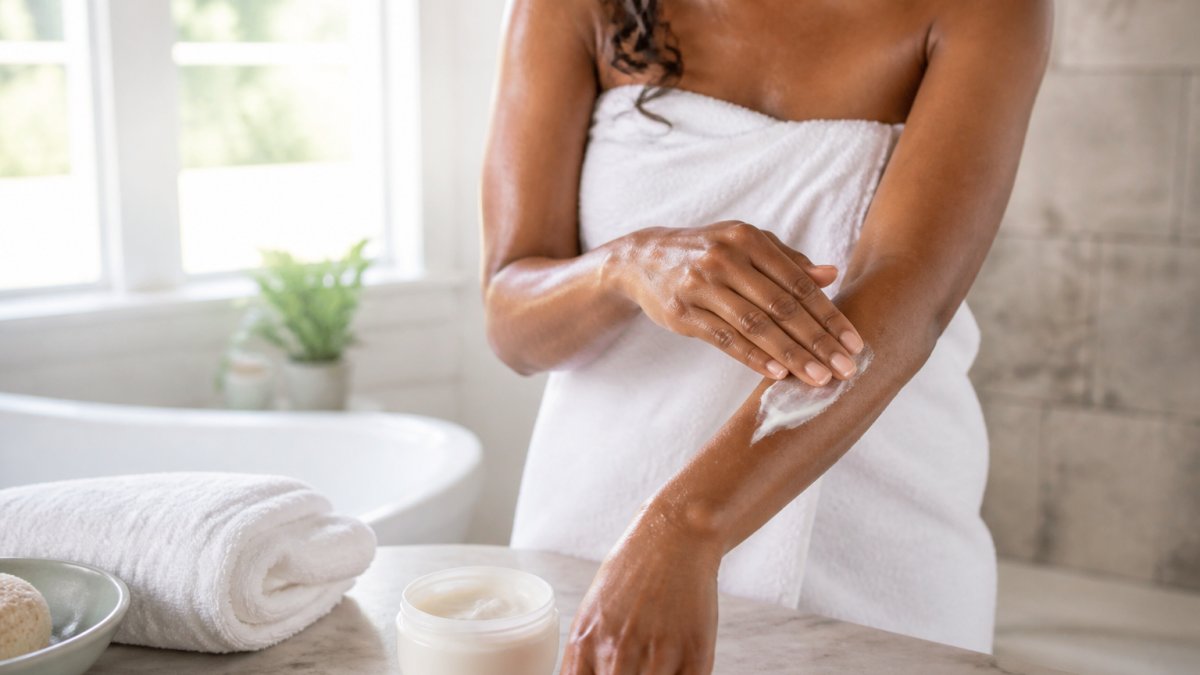
Apply body cream within three minutes of stepping out of the shower, while skin is still damp. This is the highest-impact change you can make to any routine, and it costs nothing.
The Damp-Skin Rule
Pat skin with a towel until it's damp, not dry. Then smooth cream over your legs, arms, and torso in upward strokes. The water on your skin gets pulled under the cream and held there. Skip this step and you're moisturizing a surface that has nothing left to lock in.
Order of Operations: From Thinnest to Thickest
Layer products from lightest to heaviest. A hydrating serum or lotion goes first, then cream, then a balm or oil on the roughest spots like elbows, knees, and heels. Thick products on top of thin ones seal everything in. Reverse the order and the heavy layer blocks the light one from absorbing.
Body Cream Ingredients for Dry Skin That Actually Help
Ingredient lists are where most dry-skin advice falls apart. A cream can name shea butter on the front label and still underperform if the formula leans on water, alcohol, or a heavy fragrance load. Instead of memorizing a list of hero ingredients, learn the three functional families and the trade-offs inside each one. That is the difference between buying a cream that feels nice for an hour and one that changes how your skin behaves by the end of the week.
The Three Functional Families
Humectants pull water toward the skin. Glycerin is the workhorse and appears in everything from drugstore lotions to luxury creams because it is cheap, well tolerated, and effective.
Emollients soften and smooth by filling the gaps between skin cells. Shea butter, cocoa butter, squalane, jojoba, and plant oils like sunflower and coconut all fall here.
Occlusives form a physical seal that slows water loss.
Ceramides deserve their own note. They are lipids that occur naturally in the skin barrier, and creams that include them support barrier repair rather than just sealing over it.
Reading the Label Like an Editor
Ingredients are listed in descending order by concentration until the formula drops below 1%, after which order is flexible. That means a cream with shea butter listed after fragrance and preservatives contains very little shea butter. Look for your target ingredients in the first five to seven entries.
Also scan for drying alcohols (denatured alcohol, alcohol denat.) near the top of the list. They are not automatically bad, but in a cream marketed for dry skin they work against the goal.
Fragrance and Sensitivity: The Wildcard
Fragrance is the most common cause of contact reactions in cosmetic products, and "fragrance-free" and "unscented" are not the same thing. Fragrance-free means no added fragrance; unscented can mean fragrance was added to mask the smell of other ingredients.
Patch testing is the cheapest diagnostic you have. Apply a small amount to the inner forearm twice daily for three to five days and watch for redness, itching, or bumps.
Our pick for reactive skin is the Aveeno Sheer Hydration Fragrance-Free Daily Moisturizing Lotion at $16.99. It is fragrance-free, non-greasy, and built around prebiotic oat, which supports the skin barrier without the heaviness of a petrolatum-first formula.

For a richer option, the Coconut Body Butter for Dry Skin at $19.99 melts into skin without the waxy residue cheap butters leave behind.
Body Lotion vs Body Cream: Which One Does Dry Skin Need?
Body cream is the better choice for dry skin because it contains more oil and less water than lotion, which makes it a stronger barrier against moisture loss. Lotion is lighter and absorbs faster, which suits normal skin or humid weather. Cream is thicker and lasts longer between applications.
| Format | Texture | Best For | Application |
|---|---|---|---|
| Lotion | Light, watery | Normal skin, summer | Daily, quick absorption |
| Cream | Rich, spreadable | Dry to very dry skin | Daily, after shower |
| Body butter | Thick, waxy | Rough patches, winter | Targeted, elbows and heels |
| Balm | Solid, concentrated | Cracked skin, spot treatment | As needed |
The trade-off is real: cream takes longer to absorb and can feel heavy under clothing. Apply it at night if that bothers you.
Aveeno Sheer Hydration Fragrance-Free Daily Moisturizing Lotion with Prebiotic →

Body Cream and Body Oil Layering: A Step-by-Step Routine
Layering cream and oil is the fastest route to long-lasting hydration, but the sequence matters. Here's the routine we recommend:
- Shower with lukewarm water, not hot
- Pat dry, leaving skin damp
- Apply body cream in upward strokes, working from ankles to shoulders
- Wait one minute for absorption
- Press a few drops of body oil over the roughest areas
- Reapply cream to hands and elbows before bed
Oil goes last because it's the seal. Put it on first and the cream never reaches your skin.
Choosing a Body Cream for Dry Skin at Every Price Point
Price is a poor proxy for performance in body care. A $12 drugstore cream with glycerin, petrolatum, and oat can outperform a $70 jar built on exotic oils and fragrance, because the ingredients that actually help dry skin are inexpensive. What changes with price is texture, scent, packaging, and the concentration of premium emollients, not the basic ability to hold water in your skin.
What You Actually Pay For at Each Tier
Drugstore (roughly $8 to $20). Fragrance-free formulas with glycerin, petrolatum, and colloidal oat deliver solid everyday hydration. You will find ceramides here too, often in store-brand versions of dermatologist-recommended lines.
Mid-range (roughly $20 to $45). Expect richer butters, ceramides, and nicer textures that absorb faster. You are paying for feel and for a more elegant finish under clothing.
Luxury (roughly $45 and up). Exotic oils, fragrance, and packaging drive most of the cost. Some luxury creams include genuinely good barrier ingredients, but the price premium rarely translates to proportionally better results on dry skin.
Cost Per Use Beats Sticker Price
A $65 jar that lasts three months costs about $0.72 per day. A $17 bottle that lasts six weeks costs about $0.40 per day. Neither is automatically the better buy; the point is that sticker price alone tells you nothing. Estimate cost per use by dividing the price by the number of applications you expect to get. Thick creams often require less per application than thin lotions, which narrows the gap more than the shelf price suggests.
A Measurable Way to Compare Results
Most people judge a cream by how it feels in the first ten minutes, which is the least predictive window. Use a simple one-week test instead:
- Apply the cream to the same area (for example, your lower legs) every night after a shower for seven nights.
- Each morning, rate four things on a 1-to-5 scale: comfort (tightness or itch), flaking, redness or irritation, and how the skin feels by midday.
- Note whether you needed to reapply before evening.
- Photograph the same patch in the same light each morning.
A cream that scores well at night but shows flaking by midday is not occlusive enough for your skin. A cream that scores well all day but causes itching is a sensitivity problem, not a hydration problem. Run the same test on a second cream the following week and compare the scores side by side. This is more useful than any single review, because it measures your skin rather than someone else's.
Our mid-range recommendation is the Royal Jelly Body Butter at $64.99. It is formulated with shea butter, organic honey, propolis extract, and cocoa butter, and it earns its price on very dry skin where lighter creams disappear by midday. For those wanting firming benefits too, the Collagen Infused Body Lotion at $69.99 targets barrier strength and sagging. Run the one-week test on either before deciding whether the premium is worth it for your skin.
When Dry Skin Needs More Than a Body Cream
Sometimes cream isn't the answer, and recognizing that early saves months of frustration. Eczema is a medical condition marked by intense itching, red or scaly patches, and flare-ups that don't respond to moisturizer alone. Dry skin is a temporary state; eczema is chronic and often needs a dermatologist.
See a doctor if you notice cracking that bleeds, spreading rash, or itching that disrupts sleep. The American Academy of Dermatology) outlines when moisturizing at home isn't enough. For general skin health guidance, the National Institute of Arthritis and Musculoskeletal and Skin Diseases) is a reliable starting point.
Seasonal shifts matter too. Winter air and indoor heating strip moisture faster, so switch to a thicker cream and consider a humidifier. Summer calls for lighter layers.
Frequently Asked Questions
Should you apply body cream to damp or dry skin?
Apply it to damp skin. Pat yourself partly dry after a shower, leaving a little water on the surface, then smooth the cream over your legs, arms and torso within about three minutes. The water helps pull hydrating ingredients into the outer layer, and the cream's occlusives seal that moisture in. On fully dry skin, a body cream for dry skin mostly sits on top and absorbs more slowly. If you only have time for one step, apply right after toweling off.
How often should you apply body cream for dry skin?
Twice a day works for most people: once after your morning shower and once before bed. Very dry skin, winter air, or long stretches in air conditioning may call for a third application on hands, elbows and shins. Consistency matters more than quantity. A thin layer applied daily beats a thick layer applied twice a week. If you are reapplying every few hours and skin still feels tight, the formula may be too light for your skin type.
What is the difference between body lotion and body cream?
Body lotion is water-heavy and thin, so it spreads fast and feels light, which suits normal skin or humid weather. Body cream has more oil and emollients, giving it a richer texture and a longer-lasting moisture barrier, which is why it fits dry skin better. A quick test: pump some onto your hand. If it runs, it is a lotion. If it holds its shape, it is a cream. Neither is better in general, only better for your skin.
How do you layer body cream with body oil?
Apply the cream first on damp skin, let it settle for a minute, then press a few drops of body oil over the roughest areas: shins, elbows, knees. The cream delivers water and humectants, the oil sits on top and slows water loss. Doing it the other way round can block the cream from reaching skin. Keep the oil layer thin, and skip it on your back or chest if you are prone to breakouts there.
Dry skin that stays dry despite your best efforts is frustrating, but the fix usually lives in your routine, not your shopping cart. Apply cream to damp skin, layer from thin to thick, and choose formulas built on humectants, emollients, and occlusives. Gotcha Girl Cosmetics carries affordable, ethically sourced body care for every skin type, from fragrance-free daily lotions to rich body butters. Shop our body care collection and build a routine your skin will actually thank you for.