Table of Contents
- What Glass Skin Actually Means (And What It Doesn't)
- Glass Skin Routine Steps: Your Daily Order of Operations
- Best Hydrating Serums for Glass Skin: What to Look For
- How Long to Get Glass Skin (Realistic Timelines)
- Glass Skin for Different Skin Types: Oily, Dry, Sensitive, and Aging
- Skin Barrier Health vs. Glass Skin: Why the Glow Comes Last
- SPF, Diet, and Sleep: The Habits That Make or Break Your Glow
- Budget vs. Luxury: Where to Spend and Where to Save
- Frequently Asked Questions
Last Updated: September 17, 2026
What Glass Skin Actually Means (And What It Doesn't)
Glass skin is a Korean beauty term for skin so smooth, hydrated, and even-toned that it appears translucent and reflective, like polished glass. It is not a specific product or a single treatment. It is the cumulative result of consistent hydration, gentle exfoliation, and barrier care over time.
The look gets misunderstood constantly. Glass skin is not about caking on highlighter or chasing a wet, greasy finish. It is about skin health showing through. When your moisture barrier is intact and your cells turn over normally, light reflects evenly off the surface. That reflection is the glow. At Gotcha Girl Cosmetics, we see this confusion often: people buy illuminating primers when what their skin actually needs is water, lipids, and patience.
There is no shortcut. Anyone promising glass skin overnight is selling you a filter, not a result.
Glass Skin Routine Steps: Your Daily Order of Operations
A glass skin routine follows one rule: apply products from thinnest consistency to thickest. This order lets each layer absorb before the next one seals it in. Get the sequence right and even a simple lineup performs better.
Here is the daily order that works for most skin types, with the AM and PM variations that matter.
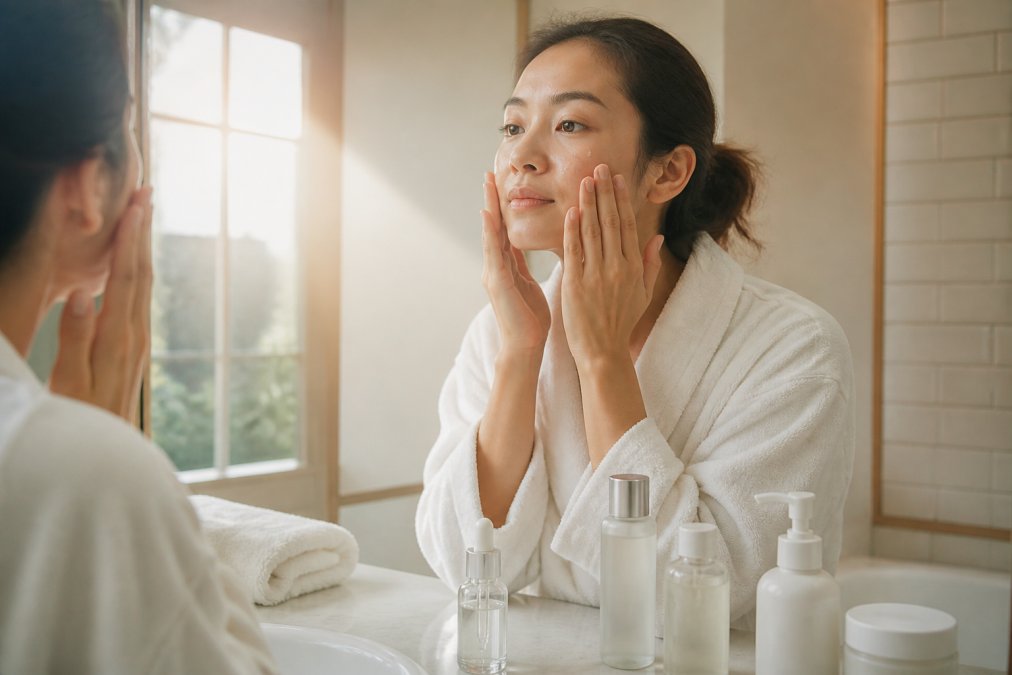
Step 1: Double Cleanse to Reset Your Skin
The double cleanse is two cleanses in one step. First, an oil-based cleanser breaks down sunscreen, sebum, and makeup. Second, a gentle water-based cleanser removes sweat and water-soluble debris without leaving residue.
A common mistake is skipping the oil stage on days you wore no makeup. Sunscreen alone justifies it, modern broad-spectrum formulas are designed to cling to skin and resist water, which is exactly why a water-based cleanser alone often leaves a film behind. If your skin feels tight after cleansing, your second cleanser is too harsh, not too weak.
AM variation: If you have dry or sensitive skin, many practitioners suggest a water rinse or a single gentle cleanse in the morning rather than a full double cleanse. Oily and acne-prone skin usually benefits from the full two-step cleanse twice a day.
Step 2: Exfoliate Without Stripping Your Barrier
Exfoliation clears the dead cells that dull your glow, but frequency matters more than strength. Two or three times a week is enough for most people. Chemical exfoliants like lactic or mandelic acid suit dry and sensitive skin; salicylic acid helps oily, congestion-prone skin; glycolic acid is the strongest of the common AHAs and works best for resilient, non-reactive skin.
Pay attention to pH and concentration, not just the ingredient name. Most well-formulated leave-on exfoliants sit in a range that lets the acid work without overwhelming the barrier, and a lower percentage used consistently beats a high percentage used sporadically. Over-exfoliating is the fastest way to wreck a moisture barrier. If your skin stings when you apply a basic moisturizer, stop exfoliating for a week.
AM vs. PM: Exfoliate at night. Acids increase photosensitivity, and evening use gives skin the overnight repair window to recover before sun exposure.
Step 3: Layer Hydration From Thinnest to Thickest
After cleansing and exfoliating, hydration goes on in layers: toner, then essence, then serum, then moisturizer. A hydrating toner restores pH balance and preps skin to absorb what follows. An essence adds a light layer of water-based moisture. A serum delivers concentrated active ingredients. Moisturizer seals everything in with emollients and ceramides.
Press each layer in with your palms rather than rubbing. Wait about 30 seconds between layers, enough for the previous product to settle, not so long that skin dries out.
AM variation: In the morning, keep the layering lighter and finish with sunscreen as your final step.
HydraGlow™ Hyaluronic Acid Facial →
Best Hydrating Serums for Glass Skin: What to Look For
The best hydrating serum for glass skin contains humectants that pull water into the skin, plus ingredients that support the barrier so the water stays there. Look for hyaluronic acid, glycerin, panthenol, and ceramides. Vitamin C and niacinamide are useful additions for brightening and evening tone.

- Humectants (hyaluronic acid, glycerin, panthenol, betaine) draw water into the upper layers. They add immediate plumpness but need something on top to hold that water in.
- Emollients (squalane, fatty alcohols, plant oils) soften and smooth the surface, which is what makes light reflect evenly.
- Occlusives (ceramides, shea butter, petrolatum) form a seal that slows water loss. Ceramides also replace lipids the barrier is made of, so they do double duty.
Matching serum to skin type:
- Oily and acne-prone: choose a lightweight, water-based serum with niacinamide. Skip heavy oils and rich creams in this layer.
- Dry: a humectant serum plus a ceramide-rich moisturizer on top. Consider a serum that also lists glycerin high on the label.
- Sensitive: fewer ingredients, no fragrance, no essential oils. Panthenol and ceramides are gentler than a high-concentration acid blend.
- Aging: hydration plus collagen-supporting actives. Peptides and vitamin C are common additions; introduce them one at a time.
How Long to Get Glass Skin (Realistic Timelines)
Expect four to eight weeks of consistent routine before you see a real change in skin texture and radiance. Hydration improves within days, but cell turnover and barrier repair take longer. Anyone promising visible glass skin in 48 hours is describing a temporary plumping effect, not a change in skin quality.
Here is what typically shifts, and when:
| Timeframe | What Changes | What You'll Notice |
|---|---|---|
| Week 1-2 | Surface hydration | Skin feels softer, makeup sits smoother |
| Week 3-4 | Cell turnover begins | Dullness fades, tone looks more even |
| Week 5-8 | Barrier strengthens | Fewer dry patches, more natural radiance |
| Week 8+ | Cumulative results | Skin reflects light evenly, pores look refined |
Glass Skin for Different Skin Types: Oily, Dry, Sensitive, and Aging
Glass skin is achievable for every skin type, but the route differs. The finish looks the same; the formula choices do not.
Skin Barrier Health vs. Glass Skin: Why the Glow Comes Last
A damaged moisture barrier and glass skin cannot coexist. The barrier is the outer layer of skin that holds water in and keeps irritants out. When it is compromised, you get redness, stinging, flaking, and a dull, rough surface that reflects light poorly. No amount of serum fixes that until the barrier recovers.
SPF, Diet, and Sleep: The Habits That Make or Break Your Glow
Sunscreen is the single most important product in any glass skin routine. UV exposure breaks down collagen, causes uneven pigmentation, and thickens the skin's surface, all of which work directly against a translucent finish. A broad-spectrum SPF of 30 or higher, applied daily and reapplied through the day, protects every other step you take.
None of this replaces a routine. It amplifies one.
Budget vs. Luxury: Where to Spend and Where to Save
Spend on the products that stay on your skin longest and do the most work: sunscreen, a well-formulated serum, and a moisturizer with ceramides. Save on cleansers, which stay on your face for under a minute, and on toners, where drugstore options perform close to luxury ones.
A workable budget approach:
- Cleanser: save here, a gentle drugstore option works fine
- Exfoliant: mid-range, one good acid is enough
- Serum: spend here, this is where actives do their work
- Moisturizer: mid-range with ceramides
- Sunscreen: spend here, you will use it daily
Frequently Asked Questions
How long does it take to see results from a glass skin routine?
Most people notice better hydration and a softer texture within 2 to 4 weeks of consistent twice-daily care. Visible glow and improved tone usually take 6 to 12 weeks because skin cell turnover runs on a roughly 28-day cycle that slows with age. If your barrier is damaged, add another few weeks for it to recover before you judge results. Track hydration, not perfection, in the first month.
Can all skin types achieve the glass skin look?
Yes, but the routine changes by skin type. Oily skin benefits from lightweight hydrating serums and gel moisturizers plus sebum control, while dry skin needs richer creams and ceramides. Sensitive skin should patch test new products and skip daily exfoliation. Aging skin can layer collagen and antioxidant products to support elasticity. The finish looks the same, but the products and frequency differ.
What ingredients should I look for to achieve a dewy complexion?
Prioritize hyaluronic acid for hydration, niacinamide for tone and sebum control, vitamin C for brightness, and ceramides for the moisture barrier. Collagen supports elasticity, and antioxidants help defend against daily stressors. A hydrating essence layered under a moisturizer locks it all in. Look for fragrance-free formulas if your skin is reactive, and introduce one active at a time so you can tell what works.
Do I need expensive products to get glass skin, or can a budget routine work?
A budget routine can work if the ingredients are right. A gentle cleanser, a hydrating essence or serum, a moisturizer with ceramides, and a broad-spectrum SPF cover the essentials. Spend more on the serum you use daily and save on cleanser and toner. Consistency and sun protection matter more than price tags, and skipping SPF will undo the brightening work of everything else.