Table of Contents
- How Long Does It Take for Retinol to Work? The Honest Answer
- Why Retinol Is a Marathon, Not a Sprint
- Your Retinol Results Timeline: Week by Week
- How Long Does Retinol Take to Work for Acne?
- How Often to Use Retinol for Beginners
- How to Use Retinol in a Skincare Routine
- How to Tell If Retinol Is Actually Working
- Common Mistakes That Slow Down Your Results
- Conclusion
- Frequently Asked Questions
Last Updated: October 17, 2026
How Long Does It Take for Retinol to Work? The Honest Answer
Most people quit retinol right before it starts working. That is the frustrating truth we see again and again. The ingredient often gets worse before it gets better, and the payoff sits weeks past the point where many users give up.
So here is the direct answer on how long does it take for retinol to work: expect 8 to 12 weeks for visible changes and 6 to 12 months for the full anti-aging effect. Retinol is a form of vitamin A that speeds up skin cell turnover, and that process simply takes time.
Below, we break down the retinol results timeline week by week, plus how to use it without wrecking your skin barrier.
Why Retinol Is a Marathon, Not a Sprint
Retinol works by accelerating cell turnover and supporting collagen production. Your skin does not rebuild overnight. It has to adjust, shed, and renew in cycles.
That is why the first month often feels like a setback. Flaking, tightness, and breakouts are common as your skin adapts. Push through the adjustment phase and the real changes begin.
Your Retinol Results Timeline: Week by Week
The retinol results timeline follows a fairly predictable arc. Here is what most people can expect at each stage.
| Stage | Timeframe | What You'll Notice |
|---|---|---|
| Adjustment | Weeks 1-4 | Flaking, dryness, mild breakouts |
| Early results | Months 2-3 | Smoother texture, brighter tone |
| Full payoff | Months 6-12 | Softer fine lines, firmer feel |
Weeks 1-4: The Adjustment Phase
This phase is about survival, not results. Your skin is getting used to a active ingredient, and it may protest.
Expect some dryness, light peeling, and possibly a purge if you are acne-prone. Keep your routine boring and gentle. Skip harsh scrubs and strong acids during this window.
Months 2-3: First Visible Changes
Around week eight, most people notice smoother texture and a brighter, more even tone. Fine lines around the eyes may start to soften.
This is the point where retinol stops feeling like a chore and starts feeling worth it.
Months 6-12: The Real Payoff
Long-term use is where retinol earns its reputation. Collagen support builds over months, so firmness and line-smoothing show up gradually.
Consistency matters more than strength here. A gentle retinol used nightly beats a harsh one used twice a month.
How Long Does Retinol Take to Work for Acne?
For acne, retinol typically needs 8 to 12 weeks to show real improvement. It helps by keeping pores clear and speeding up cell turnover, which reduces clogs over time.
The tricky part is the purge. In the first month, breakouts can look worse before they calm down. This is normal and usually settles by week six to eight.
If things are still angry at the three-month mark, your percentage may be too high or your routine too irritating.
How Often to Use Retinol for Beginners
Start with two to three nights per week. This is the safest way to build tolerance without triggering a full-blown reaction. The goal is not to hit nightly use as fast as possible; it is to reach a frequency your skin can sustain without irritation.
After four weeks with no major irritation, add a night. Work up to nightly use over two to three months. There is no prize for rushing, and a missed night does not erase progress.
- Start 2-3 nights weekly, on non-consecutive nights
- Apply to dry skin, not damp
- Use a pea-sized amount for the whole face
- Always follow with moisturizer
- Never skip daytime sunscreen
How Much to Apply (and Why It Matters)
A pea-sized amount, roughly the size of a small pea, is enough for the entire face. More product does not mean faster results; it means more irritation and a higher chance you quit before the payoff. Dot it across forehead, cheeks, nose, and chin, then spread thinly. Avoid the eyelids, the corners of the nose, and the immediate lip line, where skin is thin and prone to flaking.
The Sandwich Method and Other Buffering Tricks
Sensitive skin does better with buffering. The sandwich method means moisturizer, then retinol, then moisturizer again. It slows absorption and cuts irritation. The trade-off is that buffering can slightly soften the early results, so use it as a bridge during the first month rather than a permanent habit if your skin tolerates retinol well.
Other tricks include applying retinol after your moisturizer has fully absorbed, or mixing a small amount with your night cream. If you are using a cream formula rather than a serum, you may not need buffering at all.
Retinol Anti-Wrinkle Moisturizer →

Adjusting Frequency by Skin Type
- Oily or acne-prone: You can often move to nightly use faster, but watch for a purge that lasts beyond week eight.
- Dry or sensitive: Stay at two nights per week longer, and buffer every application for the first month.
- Combination: Treat the dry zones (cheeks, jaw) with buffering and the oily zones (forehead, nose) with direct application.
What to Do If You Miss Nights
Do not double up. Resume at your normal frequency. Skipping a night or two slows the timeline slightly but does not reset your skin's tolerance the way a full stop-and-restart does. The real reset happens when you quit for weeks and then begin again at the same strength.
How to Use Retinol in a Skincare Routine
A simple routine beats a complicated one every time. Retinol plays best with a short, gentle lineup.
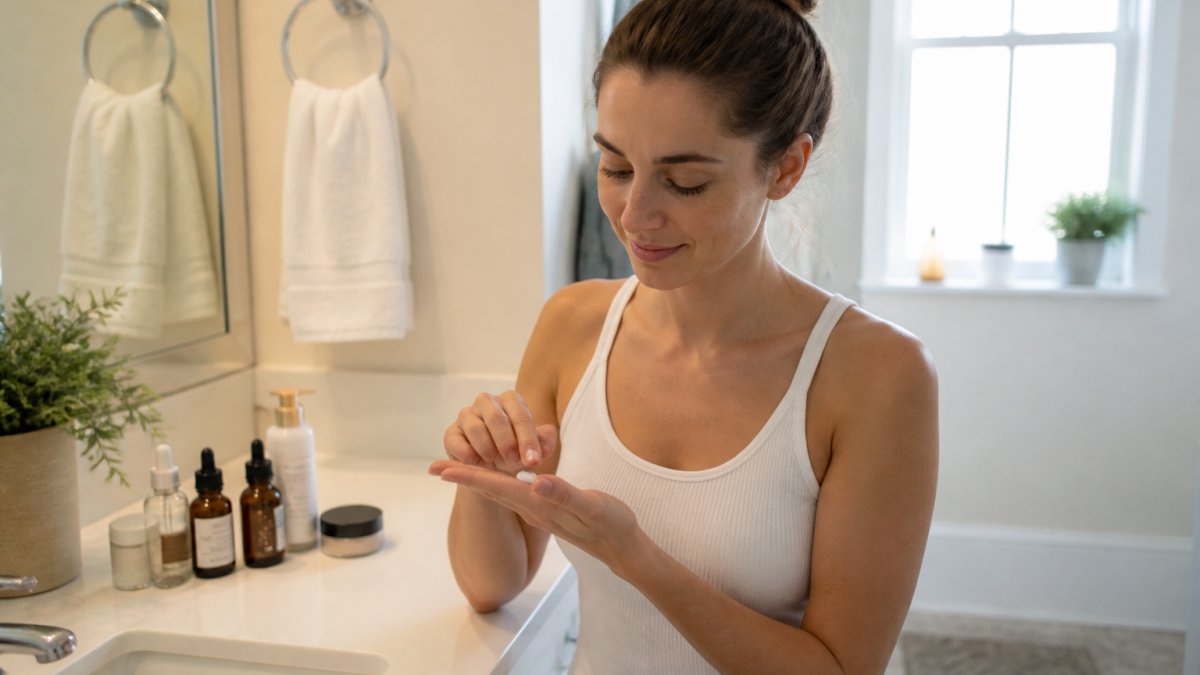
Our Retinol Anti-Wrinkle Moisturizer pairs retinol with deep hydration, so it absorbs quickly without greasiness. For a stronger anti-aging step, the Night Cream Face Moisturizer with Retinol, Collagen, Niacinamide 10% combines retinol, collagen, and 4D hyaluronic acid for layered moisture. Sensitive skin may prefer the Bakuchiol Retinol Anti-Aging Serum, which blends retinol with plant-based bakuchiol for a gentler approach.


Step-by-Step: Your Nighttime Order of Operations
- Cleanse with a gentle, non-stripping wash
- Wait until skin is fully dry
- Apply a pea-sized amount of retinol
- Follow with a hydrating moisturizer
- Use sunscreen every morning without fail
The American Academy of Dermatology notes that sunscreen use is essential when using retinoids, since skin becomes more sun-sensitive.
How to Tell If Retinol Is Actually Working
Look for texture and tone changes before line-smoothing. Smoother skin and a brighter complexion are the earliest signs. Fine lines soften later, and firmness shows up last because collagen support builds over months, not days.
Take a photo in the same lighting every two weeks. Progress is slow enough that memory lies to you. Photos do not. Use the same angle, the same window, and no filter.
If your skin feels calmer and looks more even by month three, it is working, even if wrinkles have not faded yet.
What Retinol Can and Cannot Do
This is where expectations matter. Retinol can improve texture, soften fine lines, and gradually even tone. It cannot erase deep wrinkles, reverse years of sun damage in a few weeks, or replace in-office procedures. A realistic timeline is 8 to 12 weeks for visible change and 6 to 12 months for the fuller anti-aging effect, and even then, results are gradual and cumulative, not dramatic.
A common pattern is that people notice smoother texture first, then brighter tone, then softer lines. If you are waiting for a single dramatic before-and-after moment, you may miss the real progress happening in the mirror.
Signs It Is Working vs. Signs You Should Adjust
- Working: less flaking after week four, smoother texture by week eight, more even tone by month three
- Adjust: persistent redness, stinging that lasts more than a few minutes, or breakouts that worsen past week eight
- Stop and reassess: burning, peeling that does not settle, or a rash, these suggest the strength or frequency is too high
Common Myths That Distort Expectations
- "Higher percentage works faster." It does not. It irritates faster. A gentle retinol used consistently beats a harsh one used sporadically.
- "Retinol thins the skin." It actually supports the skin over time; the early flaking is adjustment, not thinning.
- "You can skip sunscreen while using retinol." You cannot. Retinol makes skin more sun-sensitive, and unprotected UV exposure undoes the very improvements you are working for.
The U.S. Food and Drug Administration reminds shoppers that cosmetic claims should be realistic, and no cream erases years of sun damage in a week. Judge your progress against that standard, not against marketing photos.
Common Mistakes That Slow Down Your Results
The biggest results-killer is inconsistency. Skipping nights resets your skin's tolerance clock.
Other common mistakes:
- Using too much product at once
- Layering with strong acids on the same night
- Skipping moisturizer and sunscreen
- Jumping to a high percentage too fast
The U.S. Food and Drug Administration reminds shoppers that cosmetic claims should be realistic, and no cream erases years of sun damage in a week.
Conclusion
The real challenge with retinol is not picking a product. It is sticking with it long enough to see results, especially through the awkward first month.
At Gotcha Girl Cosmetics, we make that easier with gentle, affordable formulas. Our Retinol Anti-Wrinkle Moisturizer hydrates while it works, our Bakuchiol Retinol Anti-Aging Serum suits sensitive skin, and every formula is cruelty-free and free from harsh toxins.
Give your skin twelve weeks. Shop Gotcha Girl Cosmetics and start your routine with a formula built to go the distance.
Frequently Asked Questions
Can retinol make skin look worse before it gets better?
Yes, this is called retinol purging. In the first 2-4 weeks, skin can flake, feel tight, and break out in areas where you normally get clogged pores as cell turnover speeds up. Purging is temporary and usually settles by week six. Irritation that burns, stings, or spreads beyond your usual breakout zones is not purging, it is a reaction, and you should stop and cut back your frequency. Start with two nights a week to reduce the odds of a rough adjustment period.
How often should you use retinol when starting?
Beginners should start with two nights per week and stay there for at least two to four weeks before adding a third night. Once your skin handles that without flaking or stinging, move to every other night, then nightly if it feels comfortable. Jumping straight to every night is the fastest way to wreck your skin barrier and quit before you see results. A pea-sized amount for the whole face is plenty, more product does not speed up the retinol results timeline.
How long does retinol purging last?
Purging typically lasts two to six weeks, peaking around week three. It shows up as small bumps and flakes in your usual problem areas. If you are still irritated past week eight, the product is likely too strong or you are applying it too often. Drop to once or twice a week, buffer with moisturizer, and give your skin a break. A gentler formula like a bakuchiol and retinol serum can also ease the transition while you build tolerance.
When should you stop using retinol if your skin is irritated?
Stop immediately if you see raw patches, burning that lasts more than a few minutes, swelling, or peeling that feels like a sunburn. Pause retinol for five to seven days, use only gentle cleanser and moisturizer, and skip exfoliating acids. When skin is calm, restart at once or twice a week with the sandwich method: moisturizer, then retinol, then moisturizer again. If irritation returns at that lower frequency, switch to a gentler retinol or bakuchiol formula.