Last Updated: October 23, 2026
Quick Summary
The best eyeshadow for brown eyes falls into two groups: warm neutrals like bronze, gold, and warm taupe for everyday wear, and jewel tones like plum, burgundy, olive, and sapphire that create contrast and make brown eyes pop. Deep brown eyes should lean on rich mattes, metallic bronze, burgundy, and olive.
- Warm neutrals like bronze, gold, and warm taupe mirror the natural warmth in brown irises and blend easily.
- Plum, burgundy, olive, and sapphire sit opposite brown on the color wheel, creating the strongest contrast.
- The beginner routine takes about 10 minutes and follows one rule: lightest shade first, darkest last.
- Light brown or amber eyes can be washed out by pale beige or icy shimmer, so choose medium-depth satins.
- The Toffee Fusion Nude Eyeshadow Palette ($27.99) packs 48 warm and cool natural shades in four finishes.
Table of Contents
- Why Brown Eyes Have So Many Flattering Options
- The Best Eyeshadow Colors for Brown Eyes, Shade by Shade
- Eyeshadow for Dark Brown Eyes: Deep Shades That Make Them Pop
- How to Apply Eyeshadow for Beginners: A 5-Step Routine
- Daytime vs. Evening: Matching Shades to the Occasion
- Choosing the Right Palette for Your Brown Eyes
- Conclusion
- Frequently Asked Questions
Why Brown Eyes Have So Many Flattering Options
Brown eyes are the most common eye color worldwide, and that is exactly why so many eyeshadow for brown eyes shades work on them.
The key is contrast. Shades that sit opposite brown on the color wheel (plums, greens, blues) make brown eyes pop.
Below, we break down the best eyeshadow color for brown eyes by shade, skin tone, and occasion, plus a simple routine you can follow today.
The Best Eyeshadow Colors for Brown Eyes, Shade by Shade
The best eyeshadow colors for brown eyes fall into two groups: warm neutrals and jewel tones. Warm neutrals flatter every day. Jewel tones create contrast that makes brown eyes stand out.
Here is the quick version:
| Color family | Shades | Best for | Finish |
|---|---|---|---|
| Warm neutrals | Bronze, gold, warm taupe, chocolate | Everyday wear, all brown eyes | Matte, satin, shimmer |
| Jewel tones | Plum, burgundy, olive, sapphire | Evening, making eyes pop | Shimmer, metallic |
| Deep darks | Smoky brown, espresso | Dark brown eyes, smoky looks | Matte |
Warm Neutrals: Bronze, Gold, and Warm Taupe
Warm neutrals are the safest starting point for brown eyes. Bronze, gold, and warm taupe mirror the natural warmth in the iris.
A common mistake is going too light. Pale beige washes out medium brown eyes. Reach for a taupe or soft bronze instead.
Our Luxury Gathering Neutral Eyeshadow Makeup Palette ($37.99) holds 60 neutral shades. That range covers nude, cool, and dark taupe metal chocolate tones for basic looks.

Jewel Tones: Plum, Burgundy, Olive, and Sapphire
Jewel tones create the strongest contrast against brown. Plum, burgundy, olive green, and sapphire blue sit opposite brown on the color wheel. That contrast is what makes eyes pop.
Use them with a light hand for daytime. Build them up for evening.
- Plum and burgundy: rich, flattering on warm brown eyes
- Olive and deep green: earthy and unexpected
- Sapphire blue: bold, best as a liner or accent
The 12-Color Chameleon Glitter Eyeshadow Palette ($29.99) offers color-shifting pearlescent shades. Layer them over a matte base for a multidimensional look.
Eyeshadow for Dark Brown Eyes: Deep Shades That Make Them Pop
Eyeshadow for dark brown eyes should lean deep and rich. Light pastels can look chalky against dark irises. Deep shades create contrast without washing you out.
Try these:
- Smoky brown and espresso for a soft brown smokey eye
- Burgundy and plum for warmth
- Metallic bronze and gold on the lid center
The trick is placement. Keep the darkest shade in the outer V and crease. Put shimmer on the center of the lid. This pulls light toward the iris.
How to Apply Eyeshadow for Beginners: A 5-Step Routine
Learning how to apply eyeshadow for beginners starts with one rule: lightest shade first, darkest last.
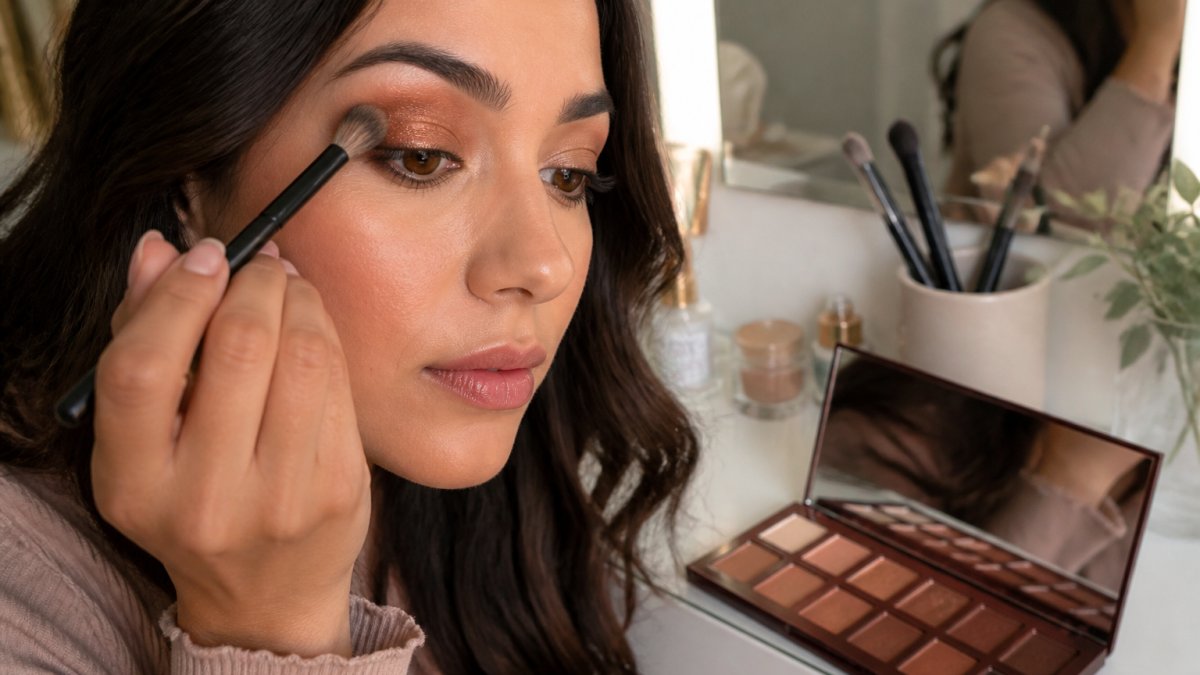
Total time: about 10 minutes. Difficulty: beginner.
What you'll need: an eyeshadow palette, a fluffy blending brush, a flat shader brush, and primer or concealer.
Luxury Gathering Neutral Eyeshadow Makeup Palette, Naked Shimmer Matte Metallic →

- Prime the lid. Smooth a thin layer of primer or concealer over the eyelid. This helps color last and blend. Set it with a light dusting of translucent powder so cream shadows do not skip.
- Apply the base shade. Sweep a shade close to your skin tone across the whole lid, from lash line to brow bone. This creates an even canvas so the next shades blend instead of patch.
- Build the crease. Use a slightly darker warm taupe or bronze in the crease. Blend in small circles with a fluffy brush, keeping the color below the brow bone.
- Deepen the outer V. Tap the darkest shade into the outer corner. Blend upward toward the brow bone, then back toward the crease so there is no hard edge.
- Add shimmer and highlight. Press a metallic shade onto the lid center with a flat brush or fingertip. Dab a light shade at the inner corner to brighten.
Expected result: a soft, blended look with visible depth and no harsh lines.
Adjusting the routine for warm neutrals
Warm neutrals are forgiving, so the risk is going too light rather than too dark. Use a taupe or soft bronze as the base instead of pale beige, keep the crease shade one step deeper than the base, and press shimmer only on the lid center. If the look reads flat, deepen the outer V rather than adding more shimmer.
Adjusting the routine for jewel tones
Jewel tones carry more pigment, so placement matters more. Use a matte neutral as the base, place plum, olive, or sapphire in the crease and outer V, and keep the lid center neutral or lightly shimmered. For daytime, apply jewel tones with a light hand and blend the edges well past the crease. For evening, build the color in thin layers rather than one heavy pass, which prevents fallout and patchiness.
Layering and blending rules that prevent muddy results
- Blend each shade before adding the next. Layering wet, unblended color is the fastest way to a muddy result.
- Tap excess pigment off the brush before it touches the lid, especially with metallics and glitters.
- Use a clean brush to soften edges between shades rather than adding more color.
Daytime vs. Evening: Matching Shades to the Occasion
Daytime makeup calls for soft, blended neutrals. Evening makeup rewards deeper color and shimmer. The shade family stays the same; only the intensity changes.
For daytime:
- Soft beige or warm taupe on the lid
- Matte bronze in the crease
- A thin line of brown liner
For evening:
- Deep plum or burgundy in the crease
- Metallic gold or bronze on the lid
- A brown smokey eye with layered shimmer
The 15-Color Waterproof Glitter Eyeshadow & Eyeliner Stick Set ($23.85) doubles as eyeshadow and eyeliner. It is a fast way to add evening shimmer without a full palette. The formula is waterproof and smudge-proof.

Choosing the Right Palette for Your Brown Eyes
Most guides stop at "warm brown eyes wear gold, cool brown eyes wear plum." That advice is too broad to act on. Brown eyes vary in depth (light amber through deep espresso) and in undertone (warm, cool, or neutral), and those two variables change which shades create the most contrast. Use this two-step filter before you buy a palette.
Step 1: Identify your brown-eye depth
Look at your iris in indirect daylight, not under warm bathroom bulbs.
- Light brown or amber: the iris reads golden or honey-colored, often with visible flecks. These eyes can be washed out by pale beige or icy shimmer. Reach for medium-depth satins and warm bronzes, and save the deepest shades for the outer corner only.
- Medium brown: the most common range. The iris reads chestnut or chocolate. This depth handles the widest range of shades, from soft taupe to jewel tones, because there is enough pigment to hold contrast without going flat.
- Deep brown or espresso: the iris reads nearly black in low light. Light pastels and frosty shades can look chalky against deep irises, so lean on rich mattes, metallic bronze, burgundy, and olive, and place shimmer at the lid center to pull light toward the eye.
Step 2: Identify your undertone
Undertone is about the skin around the eye as much as the iris. A quick check: look at the veins on your inner wrist in daylight. Greenish veins usually signal warm undertones, bluish veins signal cool, and a mix signals neutral.
| Undertone | Shades that create the most contrast | Shades to use sparingly |
|---|---|---|
| Warm | Bronze, gold, copper, olive, warm plum | Icy silver, cool gray, blue-based pink |
| Cool | Cool taupe, sapphire, plum, burgundy, charcoal | Orange-based copper, yellow-gold |
| Neutral | Rose gold, soft bronze, mauve, muted olive | Very warm orange or very icy blue |
A common pattern is that warm-undertone readers get the most payoff from bronze and olive, while cool-undertone readers get more pop from plum and sapphire.
Step 3: Match the palette to how you actually wear makeup
Once you know your depth and undertone, the palette decision gets simpler:
- One do-it-all palette: choose a large neutral palette with both warm and cool taupe, a bronze, a deep brown, and at least one plum or burgundy. That single range covers daytime and evening without a second purchase.
- Focused palette: if you already own neutrals, buy a jewel-tone palette built around plum, olive, and sapphire rather than another nude set.
- Single-shadow approach: if you want speed, one cream stick in a warm bronze or cool mauve can carry a whole look. The 2 in 1 Stick Pearly Matte Eyeshadow Cream ($10.99) is a budget-friendly single-shadow alternative that is waterproof and long-lasting.
For a beginner-friendly middle ground, the Toffee Fusion Nude Eyeshadow Palette ($27.99) packs 48 warm and cool natural shades in matte, shimmer, metallic, and satin finishes, which covers both undertone directions in one set.
Conclusion
Finding the best eyeshadow color for brown eyes is less about rules and more about contrast and tone. Warm neutrals carry your everyday look.
At Gotcha Girl Cosmetics, we make that easy with ethically sourced, affordable palettes built for real routines. Our neutral palettes offer rich, blendable color, while our shimmer sticks deliver long-lasting, waterproof wear.
Shop Gotcha Girl Cosmetics and find the shades that make your brown eyes glow.
Frequently Asked Questions
What eyeshadow colors should I avoid if I have brown eyes?
Very few shades are truly off-limits, but a few can dull brown eyes. Pale icy blues, chalky pastels, and cool grays with a grayish cast can wash out warm brown tones and make the eye look tired. Heavy silver frost applied all over the lid has the same flattening effect. If you love those colors, keep them small: a thin line along the lower lash line or a dot at the inner corner works better than a full lid. Warm metals, jewel tones, and earthy neutrals will always be safer bets.
How do I make my dark brown eyes stand out?
Contrast is the trick. Dark brown eyes have deep pigment, so mid-tone and bright shades create more separation than dark ones. Try a warm bronze or gold on the lid with a chocolate brown in the crease, then a plum or olive along the lower lash line. A dot of light shimmer at the inner corner adds brightness. Keep the darkest shade in the outer V rather than across the whole lid, and finish with mascara so the lash line frames the color.
Can people with brown eyes wear blue eyeshadow?
Yes. Blue sits opposite brown on the color wheel, so it creates strong contrast and makes brown eyes look brighter. The shade matters more than the rule: navy, sapphire, and teal flatter brown eyes, while pale baby blue tends to look flat. Apply a deeper blue close to the lash line or in the outer corner, and blend a warm neutral through the crease so the blue reads as intentional rather than costume-like. Pair it with a brown or taupe transition shade.
Do I need a primer for eyeshadow to last all day?
A primer makes a real difference, especially with shimmer and metallic finishes. It gives powder something to grip, keeps creasing down, and stops color from fading by mid-afternoon. If you don't own a dedicated primer, concealer or a foundation that matches your skin tone works as a base. Apply a thin layer, let it set for about 30 seconds, then dust a skin-toned shade over the lid before your color. Cream and stick shadows also last longer over a primed lid.