Table of Contents
- Why Your Skincare Needs Change in Your 30s
- Build Your Morning Skincare Routine for Your 30s
- Build Your Night Skincare Routine for Your 30s
- Retinol for Beginners in Your 30s
- How to Layer Skincare Products Correctly
- Common Mistakes to Avoid in Your 30s
- A Practical Routine for Sensitive Skin in Your 30s
- Realistic Expectations and Visible Results
- Frequently Asked Questions
Last Updated: October 5, 2026
Why Your Skincare Needs Change in Your 30s
Your skin changes in your 30s. Cell turnover slows, collagen production declines, fine lines appear, and past sun damage surfaces.
This is when anti-aging skincare 30s becomes essential, not optional. Starting now prevents bigger problems later, you're preventing aging, not fighting it.
The skin barrier also becomes more delicate. Hydration doesn't stick around like it used to, tone may look uneven, and dark spots emerge. These are signals your routine needs to shift.
Prevention beats treatment every time. A solid anti-aging skincare routine in your 30s can delay visible aging by years. That's not marketing talk, that's biology.
Build Your Morning Skincare Routine for Your 30s
Your morning routine should protect and prepare. Sun exposure, pollution, and environmental stress are coming, your routine needs to defend against that.
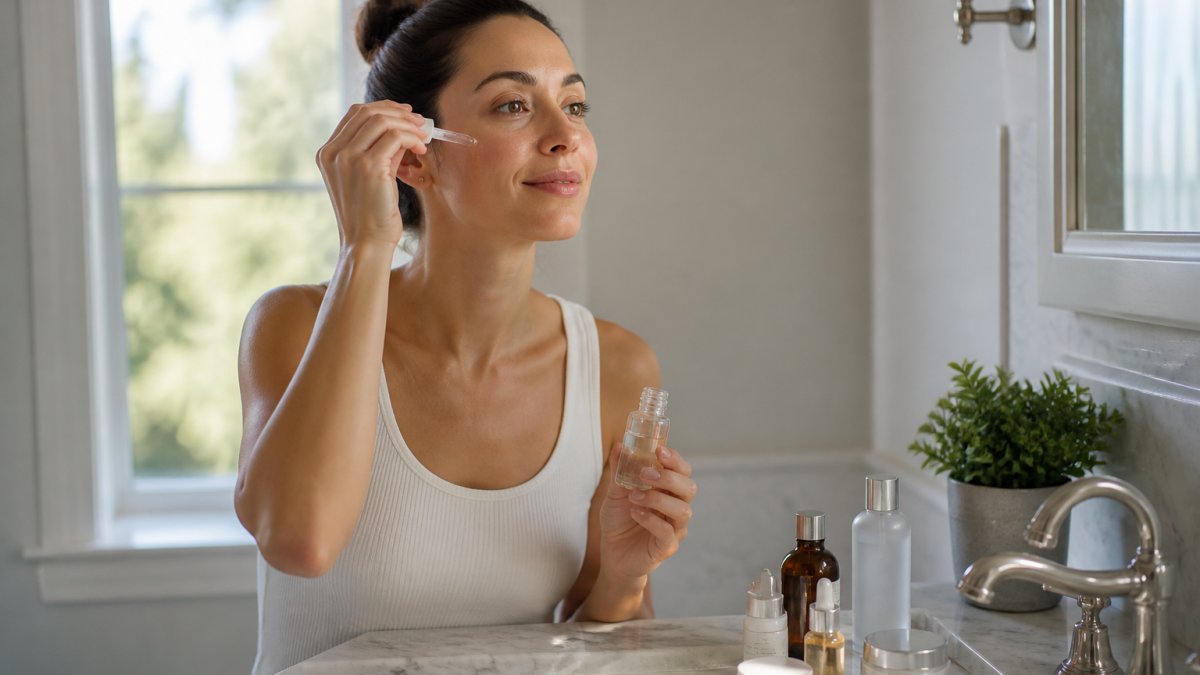
Step 1: Cleanse with a Gentle Cleanser
Start with a gentle cleanser. Not a harsh scrub. Not something that strips your skin dry.
Your skin barrier is your best friend. Damage it, and everything else stops working. A gentle cleanser removes overnight oil and debris without disrupting the barrier.
Look for a cleanser that:
- Removes makeup and oil without stripping
- Leaves skin feeling soft, not tight
- Won't irritate sensitive areas around eyes
- Works for your specific skin type
Spend 30-60 seconds. Use lukewarm water, not hot. Pat dry gently, don't rub.
Step 2: Apply Antioxidants
Antioxidants fight daily damage. Vitamin C is the gold standard. It brightens, protects against pollution, and supports collagen.
Apply your antioxidant serum to clean, dry skin. Wait 60 seconds for it to absorb. This matters. Layering too fast reduces effectiveness.
Antioxidants work best in the morning because:
- They protect against daytime oxidative stress
- Vitamin C stabilizes better under sunscreen
- They brighten skin tone naturally
- They support your skin barrier all day
Step 3: Moisturize and Protect
Hydration is non-negotiable in your 30s. Your skin holds onto moisture less efficiently now. A good moisturizer locks in what you've applied and adds its own hydration.
Then sunscreen. Every single day. No exceptions.
Broad-spectrum SPF 30 minimum, though SPF 50 is better. Reapply every two hours if you're outside. This is the single most important anti-aging step you can take.
Daily sun protection prevents:
- Fine lines and wrinkles
- Dark spots and hyperpigmentation
- Uneven skin tone
- Photoaging (sun damage that ages skin fast)
Your morning routine takes 5-10 minutes. It's the foundation for everything else.
Build Your Night Skincare Routine for Your 30s
Your night routine is where the work happens. Your skin repairs itself while you sleep. This is when you introduce active ingredients that would be irritating during the day.
Step 1: Double Cleanse to Remove the Day
Start with an oil or balm cleanser to remove makeup, sunscreen, and oil-based impurities, then follow with your gentle cleanser for water-based dirt and residue. Double cleansing sounds excessive but isn't, makeup, sunscreen, pollution, and oil build up, and one cleanser won't get it all.
The process:
- Apply oil cleanser to dry skin
- Massage gently for 30-60 seconds
- Add water and emulsify (it turns milky)
- Rinse thoroughly
- Follow with gentle cleanser
- Rinse and pat dry
Step 2: Introduce Retinol for Beginners
Retinol is the most proven anti-aging ingredient: it increases cell turnover, boosts collagen, and smooths fine lines and texture. But it's strong, so start low and go slow.
Begin with a low concentration (0.25-0.5%), 2-3 times per week, and gradually increase frequency over 4-8 weeks before considering a higher concentration.
Retinol causes adjustment period irritation:
- Mild redness
- Slight flaking
- Temporary sensitivity
This is normal. It passes. If you experience severe irritation, reduce frequency or concentration.
Gotcha Girl Cosmetics offers the Retinol Anti-Wrinkle Moisturizer at an affordable entry point. At $34.93, it's accessible for beginners.

Apply retinol to completely dry skin. Wait 20 minutes after cleansing. Damp skin increases irritation risk. Use a pea-sized amount. Spread evenly across face and neck.
Step 3: Lock In Hydration and Repair
After retinol absorbs, apply a hydrating serum or essence to add moisture back and support your barrier while retinol works. Then apply a night moisturizer, something richer than your morning one, since your skin needs intensive repair overnight.
Look for moisturizers with:
- Hyaluronic acid (holds moisture)
- Peptides (support collagen)
- Ceramides (strengthen barrier)
- Niacinamide (reduces inflammation)
Your night routine is longer than morning. That's intentional. This is when active ingredients do their work.
Retinol for Beginners in Your 30s
Retinol increases cell turnover: dead cells shed faster and new cells reach the surface quicker, revealing fresher, brighter skin.
Start with these guidelines:
Concentration matters. Retinol strength ranges from 0.25% to 1%. Start at the low end. Your skin will adapt. You can increase later.
Frequency matters. Two to three times per week is standard for beginners. Add one more night per week every 2-4 weeks, as tolerated.
Timing matters. Use retinol only at night. It increases sun sensitivity. UV exposure while using retinol causes irritation and reduces effectiveness.
Patience matters. Visible results take 8-12 weeks. Fine lines don't disappear in days. Skin texture improves gradually. Stick with it.
The Night Cream Face Moisturizer with Retinol, Collagen, Niacinamide 10% combines retinol with collagen and niacinamide at $57.99.

Retinol side effects are temporary:
- Redness (mild, fades within hours)
- Flaking (use extra moisturizer)
- Sensitivity (sunscreen becomes critical)
- Dryness (normal adjustment phase)
These are signs retinol is working. They're not reasons to stop. They're reasons to slow down your introduction pace.
How to Layer Skincare Products Correctly
Product order matters, the wrong order reduces effectiveness, blocks products from working, and can cause irritation.
Morning order:
Retinol Anti-Wrinkle Moisturizer →
- Cleanser
- Toner or essence (if using)
- Serum (antioxidant like vitamin C)
- Moisturizer
- Sunscreen
Night order:
- Oil cleanser
- Gentle cleanser
- Toner or essence (if using)
- Active treatment (retinol or other)
- Hydrating serum
- Night moisturizer
- Eye cream (optional)
Wait between layers, give each product 30-60 seconds to absorb. This prevents pilling (when products ball up on skin).
Some ingredients don't mix well:
Retinol + Vitamin C: Both are strong actives. Using them together causes irritation. Use vitamin C in the morning, retinol at night.
Retinol + AHA/BHA: Too much exfoliation. Choose one.
Niacinamide + Vitamin C: They work together, not against each other. This combination is fine.
Sunscreen placement: Always last in morning routine. It needs direct contact with skin to form a protective barrier.
The Bakuchiol Retinol Anti-Aging Serum at $32.99 offers a gentler alternative to traditional retinol. Bakuchiol provides retinol-like benefits without the irritation.

Layering correctly means:
- Each product absorbs fully
- Actives work as intended
- Irritation stays minimal
- Results appear faster
Test new products one at a time. Add one product every 1-2 weeks.
Common Mistakes to Avoid in Your 30s
Mistake 1: Skipping sunscreen on cloudy days. UV rays penetrate clouds. They're there year-round.
Mistake 3: Changing routines constantly. New product every week means you never give anything time to work.
Mistake 4: Not addressing skin barrier damage. Irritation, redness, and sensitivity mean your barrier is damaged. Stop actives.
Mistake 5: Ignoring lifestyle factors. Sleep, water intake, and stress matter. Poor sleep accelerates aging. Dehydration makes fine lines more visible.
Mistake 6: Using the same routine year-round. Winter requires more hydration. Summer requires more sun protection. Adjust seasonally.
Mistake 7: Assuming expensive means better. Price doesn't equal results. Effective ingredients matter. Consistency matters. Price doesn't.
A Practical Routine for Sensitive Skin in Your 30s
Sensitive skin needs anti-aging care too, without irritation.
Cleanser: Use a milk cleanser or cream cleanser. Oil cleansers can feel heavy. Gel cleansers can be stripping.
Active ingredient: Skip harsh retinol initially. The Bakuchiol Retinol Anti-Aging Serum at $32.99 is designed for sensitive skin.
Moisturizer: Use a fragrance-free, hypoallergenic moisturizer. Look for ceramides and hyaluronic acid. Avoid essential oils and alcohol.
Sunscreen: Physical sunscreen (zinc oxide or titanium dioxide) is gentler than chemical sunscreen for sensitive skin.
What to avoid:
- Fragrance (even "natural" fragrance irritates)
- Essential oils
- Alcohol
- Strong exfoliants
- Multiple actives at once
Your sensitive skin routine:
| Step | Morning | Night |
|---|---|---|
| Cleanse | Milk cleanser | Oil cleanser + milk cleanser |
| Active | Vitamin E serum | Bakuchiol serum (2x per week) |
| Hydrate | Hydrating serum | Hydrating serum |
| Moisturize | Barrier-repair cream | Rich night cream |
| Protect | Broad-spectrum SPF 50 | , |
Patch test everything. Apply new products to a small area behind your ear first. Wait 24 hours. No reaction? Try it on your face.
Sensitive skin doesn't mean you can't have anti-aging skincare 30s. It means you need to be strategic about it.
Realistic Expectations and Visible Results
Anti-aging skincare works. But not overnight. Understanding what's realistic prevents frustration.
Timeline for visible results:
Fine lines take 8-12 weeks to show improvement. Skin texture improves in 4-6 weeks. Hyperpigmentation and dark spots fade over 3-6 months.
Genetics, lifestyle, and sun exposure history affect results, but most people see noticeable improvement within 8-12 weeks of consistent use.
What you'll notice first:
- Skin feels smoother
- Texture improves
- Skin tone looks more even
- Fine lines appear less pronounced
- Skin looks brighter
What takes longer:
- Deep wrinkles softening
- Significant firmness improvement
- Major dark spot fading
- Overall skin elasticity returning
What skincare can't do:
- Eliminate deep wrinkles completely
- Reverse severe sun damage
- Tighten loose skin dramatically
- Replace professional treatments
Skincare prevents and improves, it doesn't erase. For severe aging concerns, professional treatments (laser, injectables, microneedling) may be necessary, but in your 30s, prevention is your goal.
The GlowLift™ Gold Collagen Anti-Wrinkle Cream Set at $69.99 is a comprehensive anti-aging solution. The three-piece set addresses multiple concerns at once.
Consistency beats intensity: the same routine daily for three months beats switching products weekly.
Frequently Asked Questions
What skincare is good for a 30-year-old woman?
A solid anti-aging skincare routine for your 30s includes a gentle cleanser, broad-spectrum sunscreen (SPF 30+), a retinoid or retinol product, and a moisturizer with hydrating ingredients like hyaluronic acid. Add an antioxidant serum with vitamin C to protect against environmental damage and support skin renewal. Start with these essentials and adjust based on your skin type and concerns, sensitive skin may need a gentler retinol alternative like bakuchiol.
Is 35 too late to start retinol?
No. Starting retinol in your mid-30s is still early for preventive anti-aging. Retinoids stimulate collagen production and cell turnover, which helps reduce fine lines and improve skin texture. Begin with a low concentration (0.25-0.5%) and use it 2-3 times per week, gradually increasing frequency as your skin adapts. If you have sensitive skin, bakuchiol is a gentler plant-based alternative that works similarly without irritation.
How should you layer anti-aging skincare products?
Layer from thinnest to thickest consistency: cleanser, toner or essence, serum (vitamin C or antioxidants), treatment (retinol), eye cream, moisturizer, and sunscreen (AM only). Wait 1-2 minutes between layers to allow each product to absorb. Avoid mixing incompatible actives, for example, don't use vitamin C and retinol in the same step. At night, skip sunscreen but follow the same order, ending with a richer moisturizer or night cream.
What is the best anti-aging cream for someone in their 30s?
Look for a moisturizer that combines hydration with anti-aging actives. The Retinol Anti-Wrinkle Moisturizer ($34.93) stimulates collagen production and reduces fine lines while hydrating all skin types. For a richer option, the Night Cream with Retinol and Collagen ($57.99) delivers intensive hydration and anti-wrinkle benefits. If you prefer a gentler approach, the Bakuchiol Retinol Anti-Aging Serum ($32.99) offers collagen-boosting results without irritation, ideal for sensitive skin.
Anti-aging skincare in your 30s is about prevention, not desperation. You're building habits now that will pay dividends for decades. The best time to start was yesterday. The second-best time is today. At Gotcha Girl Cosmetics, we've built our anti-aging collection around ingredients that work: retinol, bakuchiol, collagen, and hydrating powerhouses like hyaluronic acid. Shop our curated selection and start your preventive routine now. Your skin at 40 will thank you.